
️ ARF SolarArmilla, Granada
Off-grid power in Spain
How much solar you really need, which batteries survive a Spanish summer, when a generator earns its place, and how to charge an EV with no mains connection.
Off-grid power in numbers
20–40 kWha day for a comfortable home
€2.4kentry off-grid kit, 5 kWh lithium
€3.6kkit with 9.6 kWh lithium, 5 kW inverter
€9.9kpremium kit, 9 kWp and 9.6 kWh
Off-grid solar sizing calculator
CalculatorTick what the house will run. You get a rough starting point for panels and battery, then send it to an installer for a proper quote.
Daily use–
Panels–
Battery–
Inverter–
How it works: daily use comes from the appliance figures in How Many Solar Panels. Panels assume a cautious 3 kWh per kWp per day in winter for inland Alicante and 550 W panels; the battery covers the days you choose at 90% usable. It is a rough guide, not a quote.
Where the power goes
| Appliance | Typical use per day |
|---|---|
| LED lights | 2–5 kWh |
| Fridge | 2–4 kWh |
| Washing machine | 1–2 kWh a cycle |
| Laptop and Wi-Fi | 1–3 kWh |
| Air-con | 5–10 kWh |
| Water pump | 1–2 kWh |
| Comfortable home, total | 20–40 kWh |
Solar panels & batteries

How Many Solar Panels For Off-Grid Home in Spain? (More Than You Think!)
How to size an off-grid solar system in Spain for winter, what kits and batteries cost now, and how to make the installation legal.
Read the guide →
Battery Storage Tips for Off-Grid Living
How much battery storage an off-grid home in Spain needs, why LiFePO4 won, what modules cost now, and how to make them…
The Summer I Finally Learned to Stop Wasting Solar Power
For years I thought the difficult part of living with solar power would be generating enough electricity. It turns out the difficult…

Can Wind Turbines Power an Off-Grid Property in Spain?
Alright, so, I’ve talked solar before. A lot. But then I saw this thing in El Españolsome wind turbine claiming 700Wh output. And…
Backup power
Off-Grid Generators in Spain: Do You Need One?
When an off-grid home in Spain needs a generator, portable versus diesel, what they cost and how to wire one to a solar inverter.
Read the guide →
The Generator I Swore I’d Never Buy
A few days later, my friend Dave dropped by. Dave spends most of his working life crawling around roofs, loft spaces and…

The Day the Power Went Out (and I Remembered Why I Moved Here)
The lights went off just after lunch. No warning, no storm, just silence and the faint click from the inverter giving up.…
Using power around the house
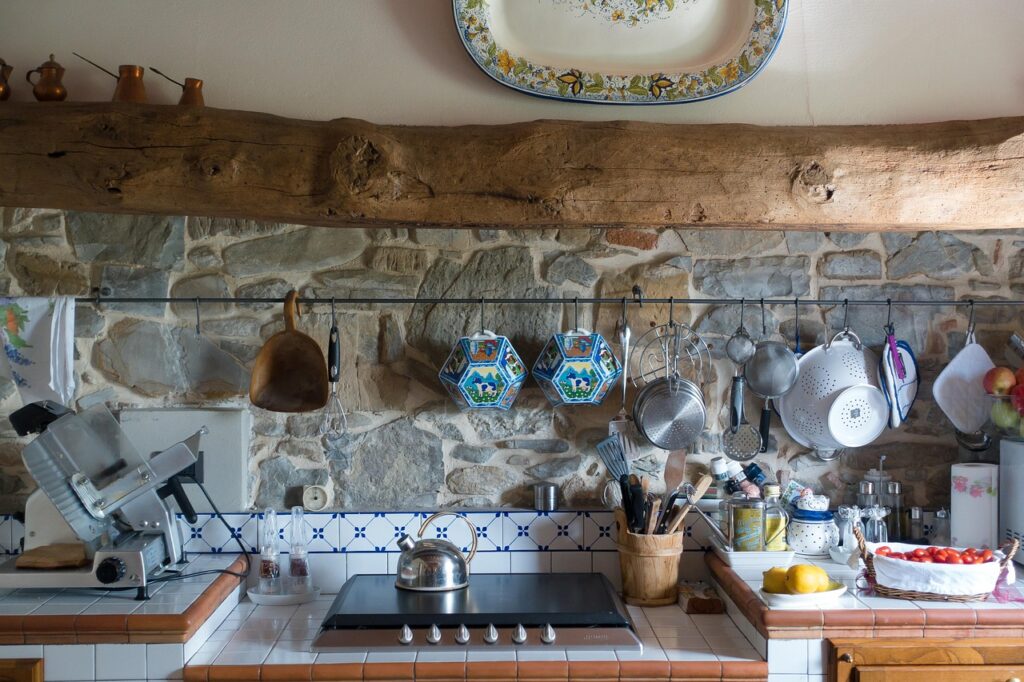
Building an Off-Grid Kitchen: Gas, Induction, and the Art of Cooking with Sunlight
The kitchen, for most people, is the heart of the home. For me, it’s also the place where optimism comes to die. Not because I can’t cook, though I’ve been known to massacre a…
Read the guide →
Electric Tools and Workshop Living: My Off-Grid DIY Setup
There’s a special kind of joy that comes from building something with your own hands. There's also a special kind of panic…

The Problem With Owning Too Many Extension Leads
When I first moved into this place I bought three extension leads. That felt reasonable. The house was half finished, half wired,…

I Nearly Talked Myself Out of a Home Cinema
One of the strange things about living out here is how quiet it gets at night. During the day the valley sounds…
Electric cars off-grid
Start here: off-grid power in Spain
Off-grid power is the system people worry about most and understand least. The panels are the easy part. What decides whether a system works is winter, the inverter and the batteries, and which jobs you ask electricity to do. This page is the order I’d think it through in.
1. Work out what you’ll use, honestly
A comfortable all-electric home uses 20–40 kWh a day. A careful one that heats with wood and cooks with gas can live on far less: ours does. The biggest decisions aren’t about panels; they’re about whether heating, hot water and cooking run on electricity. How many solar panels you need has a table of typical loads and a worked example.
2. Size for winter, not summer
A kilowatt of panels near Alicante gives about 7.5 kWh a day in summer but only 2.9 in winter. In Galicia the winter figure is under 2. Off-grid, there’s no grid to cover the gap, so you design for December and accept a surplus in July. The region guides give winter figures for each area:
- Andalucía, Murcia and the Valencian Community: about 2.8–3.3 kWh a day per kW
- Castilla-La Mancha and Catalonia: about 2.2–2.8
- Galicia: about 1.8–2.0
3. The inverter is the real limit
The inverter decides how much you can run at once and how many panels you can add later. Oversize its solar input from the start: it’s the cheapest insurance you can buy. Motors like borehole pumps pull a surge when they start, which is why I fitted a soft starter to ours.
4. Batteries for the night and the grey days
Lithium iron phosphate (LiFePO4) is now the standard. Storage should cover at least a full day of use, plus margin for cloud. My battery guide covers sizing, prices, where to put them and how to look after them in a Spanish summer.
5. Decide about a backup
We have no generator and live within what the sun gives us. Many households, especially further north, are glad of one. Do you need a generator? sets out the costs and the wiring, and the generator I swore I’d never buy is the story side of it. Wind rarely earns its place; here’s why.
What it costs
Equipment prices have fallen a long way. Off-grid kits with lithium batteries currently start at about €2,400–€2,700 for 5 kWh and €3,600–€3,700 for 9.6 kWh, and a premium Victron kit with 9 kWp of panels and 9.6 kWh of storage is about €9,900. Those are equipment prices only: mounting, cabling, installation and legalisation come on top. An off-grid installation still needs its electrical certificate, which you’ll want for any regularisation, grant or sale.
Living with it
The difference between a system that copes and one that doesn’t is often habits. Run the washing machine and the pump at midday, not at night. Learn what your background load is at 3am. Find uses for the summer surplus, as I did in the summer I stopped wasting solar power. And keep an eye on the cheap stuff that adds up, from extension leads to a home cinema.
The bigger loads each have their own guide: the off-grid kitchen, workshop tools, air-con and charging an electric car off-grid. We run a small EV ourselves, and it changed how we use the summer surplus.
Choosing an installer
A good installer is worth more than a good brand. Ask how they sized the system (if they don’t ask about your winter use, be wary), what the inverter’s maximum solar input is, whether the batteries are on the inverter maker’s compatibility list, and whether legalisation is in the price. Off-grid is a specialism, so ask to see one they’ve done. The directory lists solar installers and battery and generator suppliers by province.
Power questions
Do I need batteries if I go off-grid?
Yes. Without a grid connection, batteries keep the lights, fridge and pump running after sunset. Off-grid kits with about 10 kWh of lithium start at around €3,600 for the equipment.
Is a wind turbine worth adding?
Rarely. The guide finds serious turbines cost thousands and cheap ones online rarely deliver. Most people get more from extra panels.
Why does my system make less than its rating?
Heat, dust and cable losses. Panels lose output as they get hotter, and a Spanish roof in August gets very hot. Size for summer conditions, not the brochure figure.
Can I run air-con on solar?
Yes, with a serious battery bank. Plan on at least 20 kWh of storage if you want it running into the night.
Off-grid solar installers and more
See all 254 →5.0 (307 reviews on Google)
Solvi SistemasTavernes Blanques, Valencia
LuzentumSan Juan de Alicante, Alicante
NeorenovablesAlhaurín el Grande, Málaga
Grupo MostazoViñuela, Málaga
Mi Luz SolarFonelas, Granada