
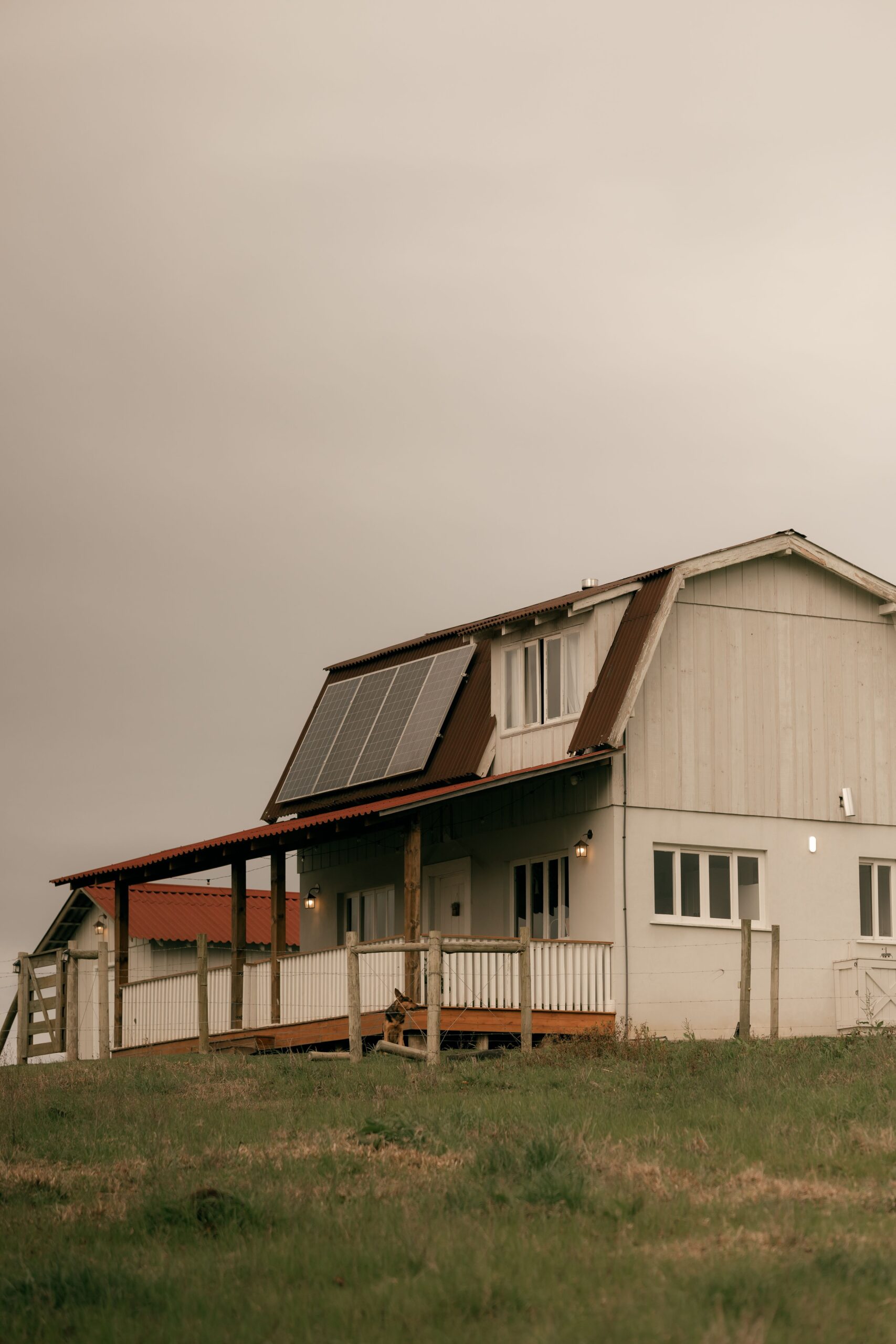
For years I thought the difficult part of living with solar power would be generating enough electricity.
It turns out the difficult part is being awake when you have too much of it.
By ten in the morning the panels are already working harder than anyone else in the house. By midday the batteries are full and the inverter is sending out numbers that make me feel unusually competent.
Then the sun goes down and I start cooking.
This is how I ended up thinking about buying a generator in June.
There was nothing wrong with the solar array. There was plenty of power arriving during the day. I just wasn’t using much of it. The washing machine sat idle. The car remained plugged in but not charging. I waited until the evening to cook and usually remembered the dishwasher shortly before going to bed.
I was producing electricity when I didn’t need it and using it when I could no longer produce it.
Dave had pointed this out while patiently dismantling my generator plan. I agreed with him at the time. Then I carried on doing exactly the same thing for another week.
Changing the system would have been easier than changing my habits.
The batteries were not the problem
Batteries make off-grid electricity feel deceptively simple.
Power comes in. Power gets stored. Power comes out later.
That is broadly true until you start treating the battery as though it has no limit. Mine would reach full charge during the brightest part of the day and sit there while the panels had nowhere useful to send the remaining production.
Several hours later I would switch on the oven, boil the kettle and discover that someone had already put the washing machine on.
The battery percentage dropped far more quickly than it had risen.
My first reaction was always the same. I needed more storage.
Another battery would certainly give me more room, but it would not stop me wasting the best part of the day. I would just have a larger and more expensive battery to empty after sunset.
So I started paying attention to when the power was actually available.
Not the weather forecast. Not the theoretical output printed on the panel specifications. The real number on the inverter at that moment.
That number turned out to be more useful than most of the equipment I had spent weeks researching.
Midday became the busy part of the day
I had always used appliances when they suited me.
That sounds obvious because it is how houses normally work. You put the washing on when the basket is full. You run the dishwasher after dinner. You charge things overnight so they are ready in the morning.
Solar power has different ideas.
Once I stopped fighting it, the middle of the day became the time for anything that used serious electricity. Washing went on when the panels were producing well. The dishwasher followed once the first load had finished. Tool batteries were charged while there was power to spare rather than the night before I needed them.
The car was the biggest change.
I had already learned that slow daytime charging worked better than trying to fill it quickly. What I had not learned was to plug it in whenever there was surplus power, even if it only needed a small top-up.
I kept waiting until the battery was low enough to make charging feel worthwhile. That meant missing several good solar days and then needing electricity at the wrong time.
Now the cable stays ready. If the house batteries are full and production is still strong, the car gets whatever the house does not need. It might not be much, but those short charges add up.
There was no new equipment involved. I just stopped expecting the sun to work to my timetable.
The kitchen needed the most attention
Cooking caused most of my evening electricity use and nearly all of my complaints about it.
The problem was not always the amount of energy. It was the way several appliances arrived at once.
The oven was heating. The fridge was running. The water pump started because someone turned on a tap. Then I used the kettle without thinking and watched the inverter react as though I had personally insulted it.
I did not want to start eating dinner at three in the afternoon, so I began moving the preparation instead.
Food that could be cooked earlier was cooked while the panels were producing. Water was heated during the day and kept for later. If I wanted to use the oven, that became the main electrical job rather than one of four things happening at once.
Dinner remained at a normal time. The heavy work had already been done.
I still get this wrong. The difference is that I now understand why it has gone wrong.
The air conditioning stopped feeling like a crime
Air conditioning creates a peculiar sort of guilt when you produce your own electricity.
You can see exactly what it is using. Every time the compressor starts, the number changes. It is difficult to relax in a cool room while watching your battery percentage fall.
During summer, though, the hottest part of the day is also when the panels are producing most strongly.
I had been avoiding the air conditioning during the afternoon because it felt wasteful. Then I would turn it on later when the house was hot, the sun was disappearing and the batteries were about to take over.
That made no sense.
Cooling the house earlier was easier on the system. It also meant the walls and rooms did not hold as much heat into the evening. I did not need to run the air conditioning as hard or for as long once solar production fell.
I had been saving electricity at the precise time I had the most of it.
I stopped trying to make every day perfect
There are still cloudy days. There are still times when the batteries end the evening lower than I would like. A larger storage system may eventually be worthwhile and a generator might still have a place as emergency backup.
The difference is that I can now separate a genuine shortage from one I created myself.
If the batteries are low after several poor days, that is a limitation of the system. If they are low because I ignored five hours of strong sunshine and ran everything after dark, that is me being an idiot.
August has made the routine easier. The panels begin producing early and continue well into the evening. There is enough surplus on a good day to cover the house, charge the car and still make me wonder where else I could put an appliance.
Winter will be less forgiving.
I am still looking at generators online occasionally, although less often than before. The one in my shopping basket has now been there long enough for the website to stop sending reminder emails.
That feels like progress.