Galicia is the opposite of where I live. Green instead of brown, rain instead of drought, granite villages instead of whitewashed fincas. It also has thousands of abandoned stone houses in tiny hamlets, which is why it keeps coming up when people ask me where they could afford to go off-grid.
Galicia works differently from the south in almost every way that matters here: the planning rules, the water and, above all, the sun. This guide is research, not experience, and every figure is linked to its source.
I’m not a lawyer. Rules change and town halls read them differently. Use this as a map, then get a local lawyer and architect to look at the actual property.
The land rules in Galicia
Galicia’s planning law is the Ley 2/2016 del suelo de Galicia. Unlike most regions, it doesn’t just have urban and rustic land. It keeps four classes, urban, rural settlement (núcleo rural), developable and rustic, and that third-way category is the key to buying in the Galician countryside.
Núcleo rural: where you can build
Galicia’s settlement pattern is thousands of small hamlets, and the law recognises them as núcleo rural, which it splits into traditional and common rural settlements. In a núcleo rural, building or rebuilding a house is generally possible within the town’s rules. Out on rustic land proper, it’s very restricted.
So the first question for any Galician property is: is it inside a núcleo rural, or on rustic land? The town hall’s plan will show the boundary, and it can run right through a field.
Old stone houses
Galicia has gone further than most regions to encourage the restoration of traditional buildings. Article 40 of the law covers existing traditional buildings and those of singular architectural value, and a 2019 reform of the regulation set out to promote the restoration of existing traditional buildings in any category of rustic land and in rural settlements, for any use that isn’t incompatible.
Age helps too. In one report, the Xunta’s planning department accepted that catalogued buildings on rustic land dating from before the 1975 land reform could be treated like licensed buildings, since no licence could have existed. That’s one town’s case, so don’t assume it applies to yours, but it shows why the age of a building is worth proving.
Unlicensed additions
As anywhere, check every building and extension against what’s licensed and registered. My guide to legalising a rustic house explains the general idea and the checks to make; a Galician lawyer will know how the regional rules apply.
Purchase tax and buying costs
Galicia charges a flat 8% transfer tax on resale property, with a reduced 3% for some young buyers and large families. On a €100,000 stone house that’s €8,000, before notary, registry and lawyer’s fees.
A Galician speciality to watch for: properties owned by several heirs, sometimes scattered across countries. A house can’t be sold cleanly until every owner agrees and the title is in order. My guide to checks before buying rural land covers the Registry checks.
Sun and power: the hard part
This is where Galicia is genuinely different. Winter sun is far weaker than in the south:
| Place | Winter output per kW of panels | Summer output per kW |
|---|---|---|
| Ourense | 1.95 kWh a day | 7.12 kWh a day |
| Fonsagrada (mountains, Lugo) | 1.84 kWh a day | 6.03 kWh a day |
| For comparison: Alicante | 2.89 kWh a day | 7.54 kWh a day |
Allowing 20% for losses, a household needing 10 kWh a day in winter would want about 6.4 kWp of panels in Ourense (twelve 550 W panels) and nearer 6.8 kWp in the mountains (thirteen). Our system in Alicante would give only about 7–8 kWh a day in a Galician winter, and much less in a long wet spell, which Galicia gets plenty of.
The source for those figures also flags fog and cloud in autumn and winter around Ourense. In practice, that means three things for an off-grid house in Galicia:
- More panels and more battery than you’d need in the south, with room to add more.
- A backup generator is much more likely to earn its keep. My generator guide covers the options.
- Heat with wood. Galicia has plenty of it, and heating with electricity off-grid in a damp winter is a losing battle. See heating an off-grid home.
Small-scale hydro from a stream is an option that barely exists where I live but can make sense in Galicia, if the water rights allow it. Ask the water authority before you buy a turbine.
Water: plenty, but still paperwork
Water is the easy part in Galicia, for once. The internal basins are managed by Augas de Galicia, and the Miño and Sil by the Confederación Hidrográfica del Miño-Sil. Old houses often have springs, wells or shared village water. Rainwater harvesting works far better here than in the south: my rainwater guide shows the maths for a dry region, and Galicia’s numbers will be kinder.
Shared water is common in hamlets, so find out who has rights to what. And test the water before you drink it: ask a local lab what’s worth testing for in that area. My filtration guide covers treatment.
Damp
An off-grid stone house in Galicia lives or dies on damp control: roof, drainage, ventilation and heat. Budget for it as seriously as you budget for solar.
Waste
Many hamlets have no sewer, so a septic tank or small treatment plant is normal. Wet ground and high water tables affect what’s possible, so get a percolation test. My guide to septic tank rules explains permits.
What I’d check before buying in Galicia
- Núcleo rural or rustic land? The town plan decides what you can build.
- Who owns it. Every heir must sign. Check the Registry.
- The age of the building. Proof it’s old can make a real difference.
- Roof, damp and structure. Get a building survey.
- Winter sun on the actual site. Valleys and north-facing slopes can lose it for months.
- Water rights in a shared hamlet.
What it costs to set up here
Here’s a rough set-up budget for an off-grid house in Galicia, assuming a €150,000 resale purchase. The system prices are national figures I’ve checked, so get local quotes before you rely on them.
| Item | Typical cost |
|---|---|
| Purchase tax (8% on €150,000) | €12,000 |
| Off-grid solar kit, 9.6 kWh lithium, 5 kW inverter (equipment only) | €3,600–€3,700 |
| Installing and legalising the solar system | Legalisation from about €600; installation on top |
| Rainwater tank, installed | €1,500–€7,000 |
| Borehole, if you need one | €1,800–€15,000 |
| Septic tank (tank only) | €900–€5,000, plus fitting from €1,500 and licences of €500–€2,000 |
| Or a small treatment plant, installed | €2,000–€4,000 |
| Starlink internet | From €35 a month, plus a €10 monthly kit fee for new customers |
For a household using about 10 kWh a day, the winter figures above point to twelve to thirteen 550 W panels (around 6.4–6.8 kWp), so the kit in the table would need more panels added. In Galicia the extra budget goes on solar capacity and damp control rather than water. For running costs once you’ve moved in, see first-year costs of living off-grid.
Heating, cooling and the seasons
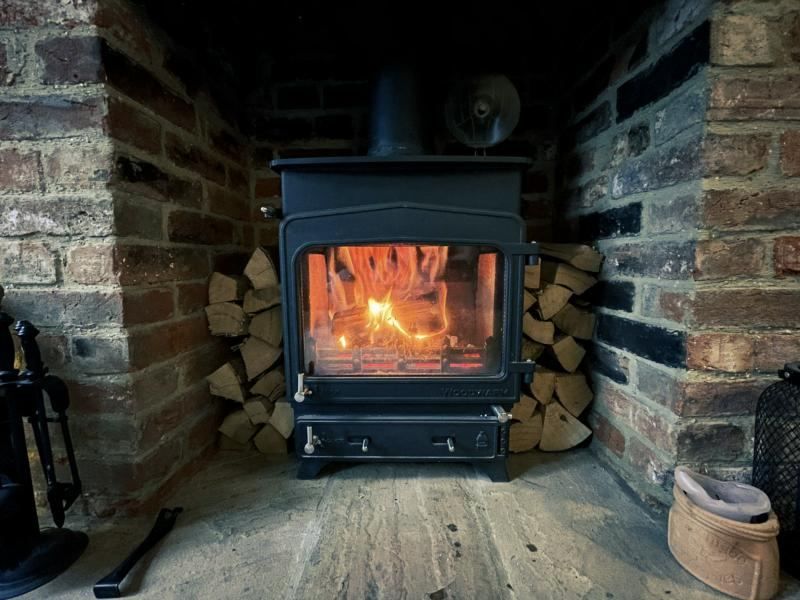
Galicia is mild compared with inland Spain, but long, wet and grey. The challenge isn’t extreme cold; it’s damp, and keeping a stone house dry and warm for months with little sun. A wood stove running through the winter does both jobs, and Galicia has plenty of firewood.
Summers are pleasant and rarely need air-con, especially near the coast. Inland valleys like Ourense get hot spells, but thick stone walls handle them well. Put the energy budget into winter, not summer.
Internet
Coverage in rural Galicia varies from valley to valley. Check the 4G coverage map, then test your phone at the property at different times of day. Where 4G is weak, Starlink works almost anywhere with a clear view of the sky. Remember that routers and dishes run all night, so include them in your power budget. My internet guide compares the options.
Buying in Galicia, step by step
- Get the cadastral reference and look at the Catastro record. My guide shows four ways to find it.
- Order a nota simple from the Land Registry and compare it with the Catastro and with what’s actually there.
- Check whether the property is inside a núcleo rural or on rustic land.
- Check the Registry for every owner, and make sure all heirs will sign.
- Gather evidence of the building’s age.
- Get a survey of the roof, damp and structure, and check winter sun on the site.
- Pay an architect for a site visit before the deposit contract, and get a written opinion.
- Have a lawyer write conditions into the deposit contract so you can walk away if the checks fail.
- Sign at the notary, pay the purchase tax, and register the property in your name.
The general checks are covered in checks before buying rural land, and if the property is half fallen down, read buying a ruin step by step as well.
Who to talk to
You’ll deal with the same handful of offices wherever you buy, but it helps to know who does what:
- The town hall’s planning department (urbanismo): the land category, licences, and a written planning report on the plot.
- The Land Registry (Registro de la Propiedad): the nota simple, which shows owners, debts and charges.
- The Catastro: the official description of the land and buildings for tax.
- The water authority, here Augas de Galicia or the Miño-Sil authority: boreholes, wells and discharges.
- The regional industry department, here the Xunta’s industry department: registering the solar installation’s electrical certificate, usually done by your installer.
- A notary: signs the deed. Notaries check identities and paperwork, not the property itself.
A local architect and a property lawyer will deal with most of these for you, which is the main reason to hire them early.
Mistakes I’d avoid here
- Not checking whether the house is inside a núcleo rural.
- Paying a deposit before every heir has agreed to sell.
- Sizing solar for a southern winter instead of a Galician one.
- Treating damp as a cosmetic problem.
Quick facts
| Planning law | Ley 2/2016 del suelo de Galicia |
| Where building is easier | Inside a núcleo rural (rural settlement) |
| Old buildings | Restoration of traditional buildings actively encouraged |
| Purchase tax (resale) | 8% flat |
| Winter solar, per kW of panels | About 1.8–2.0 kWh a day |
| Water authorities | Augas de Galicia; Miño-Sil |
The supplier directory doesn’t cover Galicia yet; see the provinces we cover.
Questions people ask me
Is Galicia cheap?
Old stone houses in remote hamlets can be cheap to buy. Restoring them, sorting the title and keeping them dry isn’t. Budget the whole project, not the purchase price.
Can I really go off-grid with that little winter sun?
Yes, but with a bigger system, a wood stove and probably a generator for the darkest weeks. Some people stay grid-connected and add solar instead; if there’s a grid connection nearby, that’s worth pricing.
Is water ever a problem?
Less than in the south, but dry summers do happen, and shared village water can cause disputes. Get the rights in writing.
Can I use a stream for hydro power?
It can make sense in Galicia, but using river water needs permission from the water authority. Ask Augas de Galicia or the Miño-Sil authority before you buy equipment.
Are there grants for restoring old houses?
Grant schemes change often, so I don’t list them. Ask the town hall and the Xunta what’s open when you buy.
Is it hard to buy a house with many owners?
It can take time. Every owner must sign at the notary, so a lawyer should confirm they’re all identified and willing before you pay a deposit.
The short version
Galicia has water, wood, cheap stone houses and planning rules that actually encourage restoration, especially in rural settlements. What it doesn’t have is winter sun. Size your system for a grey December, heat with wood, and check who really owns the house before you fall for it.
Leave a Reply