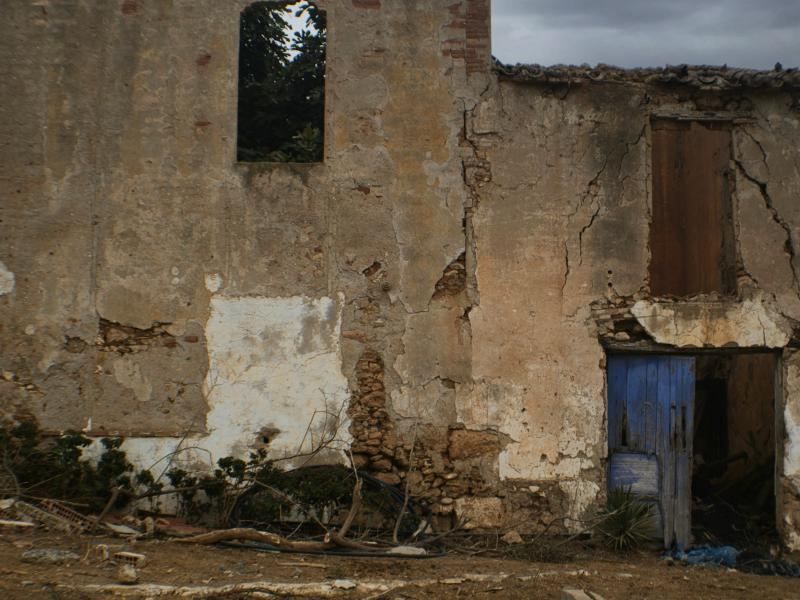
I have a weakness for ruins. Our finca near Hondón was semi-abandoned when we bought it in spring 2025: a roof that was mostly a roof, walls that were mostly walls, and a well that was entirely dry. Before that, I spent an embarrassing number of evenings mentally restoring a wreck in Jávea, which I wrote up in my breakdown of the costs of rehabilitating a ruin.
Ruins are cheap for a reason. Some reasons are fixable with money and patience. Some aren’t fixable at all. The trick is finding out which kind you’re looking at before you hand over a deposit.
This is the order I’d do it in now, with what each step costs and what can go wrong. I’m not a lawyer or an architect, and you’ll need both. This guide is about asking them the right questions.
Step 1: Decide what you’re really buying
A ruin listing usually sells a dream: stone walls, a view, potential. What you’re actually buying is three separate things:
- A plot of land, with a planning category that decides what’s allowed on it.
- A building, or what’s left of one, with a legal status that may or may not match what’s standing.
- Rights and burdens: access, water, boundaries, debts, and sometimes other people’s rights over your land.
Keep those three apart in your head. A beautiful building on a protected plot with no legal access is three problems, not one.
Step 2: Check the building legally exists
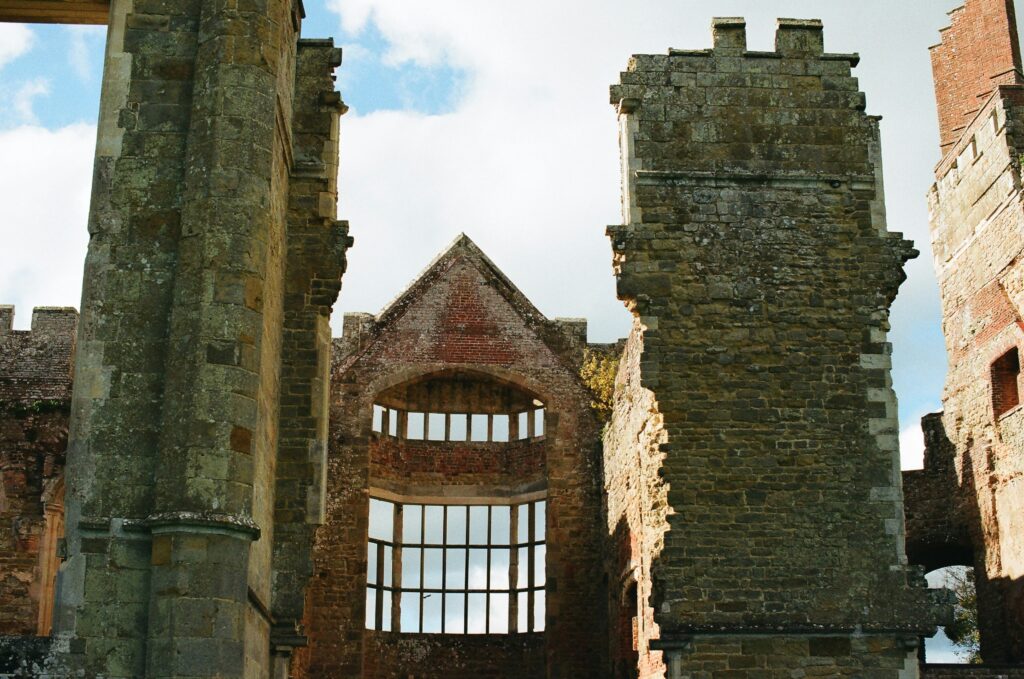
This is the big one. In general, a building that legally exists can be repaired and kept in use. A building that never had a licence, or has collapsed so far that there’s nothing left to repair, is a different story: rebuilding it can be treated as new construction on rustic land, with all the restrictions that come with it. My guide to what you can build on rustic land sets those out by region.
What to look for:
- The Catastro record. Get the cadastral reference (here’s how) and check the building’s year and surface area.
- The Land Registry. Order a nota simple. Online, through the Registrars’ website, it costs €9.02 plus VAT. Check whether the building is registered at all, and whether the description matches what you see.
- Old aerial photos. Your architect can compare historical flights to show the building existed at a given date. That date can matter enormously: in Andalucía, for example, buildings on rustic land finished before 16 August 1986 have their own route to certification.
- The town hall. Ask for a planning report on the plot, and whether there are any disciplinary files open on it.
If the building isn’t registered or licensed, read my guide to legalising a rustic house. In Andalucía, time may help through the AFO route. In the Valencian Community, it no longer does on rustic land, and the minimisation route applies only to buildings finished before August 2014.
Step 3: Check the land
A ruin sits on land, and land has its own traps. My guide to checks before buying rural land covers them in full. For a ruin, focus on:
- Planning category: is it protected for landscape, ecology, flood risk or forest?
- Access: is there a legal right of way to the building, not just a track the seller uses?
- Boundaries: do the Catastro, the Registry and the walls on the ground agree?
- Livestock routes and watercourses crossing or bordering the plot.
Step 4: Get a survey before you sign anything
Pay an architect or technical architect for a site visit and a written opinion. Ask them to cover:
- Structure: roof, walls, floors and foundations. What can be saved and what must be rebuilt.
- Legal status: what’s registered versus what’s built, and the realistic route to make it right.
- What the council will allow: repair, extension, change of use, and what counts as new build.
- A rough budget for the works, broken down.
This is the best money you’ll spend. A few hundred euros now can save tens of thousands later, or save you from buying at all.
Step 5: Price in the services
A ruin rarely comes with working services. For an off-grid home, budget separately for each:
- Water: a registered borehole, rainwater storage, deliveries, or a mix. See borehole permits and water deliveries and tanks.
- Wastewater: a permitted septic system or a sealed tank. See septic tank rules.
- Power: solar, batteries and maybe a generator. See solar sizing and costs.
- Internet: check before you buy. See staying connected.
- Access: a track that a delivery lorry and a septic truck can actually use.
Step 6: Work out the full purchase cost
The price on the listing is not the price you pay. For a resale property, the main extra is the regional transfer tax (ITP), charged on the higher of the price and the official reference value. The general rates in the regions I cover are:
| Region | General ITP rate | Source |
|---|---|---|
| Valencian Community | 9% from 1 June 2026 (previously 10%); 11% above €1 million | Idealista, Gibobs |
| Andalucía | 7% | Idealista |
| Murcia | 7.75% | Gibobs |
| Castilla-La Mancha | 9% | Guía Fiscal |
Reduced rates exist for some buyers (young buyers and large families, for instance), and the conditions vary by region. Check with the regional tax office or your lawyer.
On top of the tax, budget for the notary, the Land Registry, your lawyer, the architect’s survey, and any gestor fees. Ask your lawyer for a written estimate of all of them before you sign the deposit.
Step 7: Watch out for the neighbours’ right to buy
This one surprises nearly everyone. Under article 1523 of the Civil Code, when a rustic plot of no more than one hectare is sold, the owners of neighbouring rustic land can have the right to step into your shoes and buy it at the same price and on the same terms. It doesn’t apply if the plots are separated by ditches, streams, ravines, tracks or other visible easements. If several neighbours claim it, the one with the smallest adjoining plot has priority.
The window is short: the Civil Code gives the neighbour nine days from registration of the sale, or from when they found out about it. A separate right under the 1995 law on farm modernisation gives neighbouring owners of priority farms a longer window, of a year from registration or 60 days from formal notice.
In practice, a lawyer can advise on how to reduce the risk, for example by giving neighbours formal notice. If you’ve fallen in love with a small plot, ask about it early.
Step 8: Sign a deposit contract with conditions
Spanish purchases usually start with a deposit contract (*contrato de arras*), with a deposit of around 10% of the price. Standard terms mean you lose the deposit if you pull out, and the seller pays double if they do.
For a ruin, insist your lawyer adds conditions that let you walk away with your money back if, for example:
- The planning report shows the building can’t be restored as described.
- The legalisation route turns out to be impossible or far more expensive than estimated.
- The access, boundaries or water rights aren’t as described.
Step 9: Complete at the notary
You’ll need an NIE (foreigner’s identity number) and a Spanish bank account. Your lawyer checks the title and debts (including unpaid IBI and community charges), the notary reads the deed, you pay, and the deed goes to the Land Registry. Pay the transfer tax within the deadline your region sets.
Step 10: Licences for the works
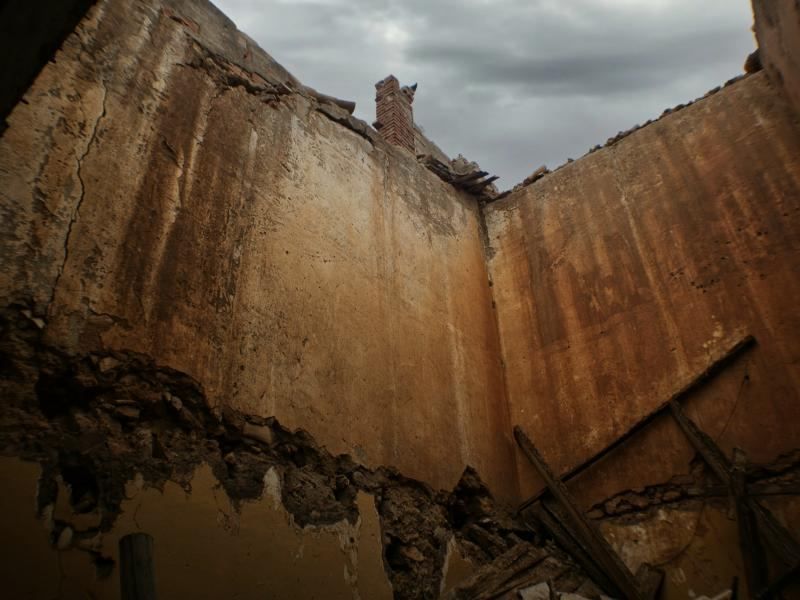
Before you start knocking down walls, you need the right licence for the works. Repairs are usually simpler than major structural work, which will need a project by an architect.
Councils charge two separate things: the construction tax (*ICIO*) and a licence fee. They vary a lot from town to town. One analysis of 17 cities found that for a €180,000 house, the ICIO ranged from €4,932 in Elche to €9,000 in Bilbao, with fees from €324 to €6,386. Rural towns are usually cheaper, but ask before you budget.
If the house is near forest, extra rules apply to works. In the Valencian Community, works within 100 metres of forest land, or up to 500 metres where vegetation could carry a fire to it, must be notified to the forestry authority in many cases.
Step 11: Plan the works in the right order
From our own renovation, the order that worked was:
- Make it safe: roof, structure, and anything that could fall on someone.
- Get water and a toilet working, even temporarily. We started with a composting toilet.
- Get basic power in, with the solar system sized for the finished house, not the building site.
- Close up the shell: windows, doors, insulation.
- Then, and only then, the nice bits.
Live on site if you can. It’s uncomfortable, but you learn where the sun falls, where the wind comes from, and where the water goes when it rains. That knowledge shapes every decision after.
Living on site during the works
We lived on site for much of our renovation, and I’d recommend it if you can stand it. You catch problems early, you’re there when the builders have questions, and you save on rent. But plan it properly: a dry, secure room or a caravan (check with the town hall first), a working toilet, safe drinking water, and enough power for a fridge, lights and charging. A small solar kit with a battery, which later becomes part of the house’s system, is ideal.
It’s not glamorous. There were weeks when everything we owned was covered in dust. But it taught us more about the house than any survey.
Red flags
Any one of these doesn’t mean walk away. Several together usually do.
- The building isn’t in the Land Registry, and nobody can show when it was built.
- The seller or agent won’t let you speak to the town hall, or discourages a survey.
- The plot is in a protected zone, a flood zone, or right next to a watercourse.
- Access is “by agreement” with a neighbour, not a registered right of way.
- The price looks like a bargain compared with similar ruins nearby. There’s usually a reason.
- There are several owners from an inheritance, and not all of them have signed.
- A previous buyer pulled out and nobody will say why.
A realistic budget
There’s no honest single figure, but here’s how I’d structure it:
| Item | How to estimate it |
|---|---|
| Purchase price | Agreed price |
| Transfer tax | 7–9% in the regions above |
| Notary, registry, lawyer | Ask for a written estimate |
| Survey and legal status | Architect’s fee before buying |
| Legalisation, if needed | Architect’s estimate plus town hall fee |
| Structure and shell | Architect’s estimate, plus 20–30% contingency |
| Services (water, septic, solar) | See the guides linked above |
| Licences and ICIO | Ask the town hall |
That 20–30% contingency is my rule, not a standard. Every ruin hides something. Ours hid a fine collection of old plumbing and electrics that went straight into a skip.
Questions people ask me
Can I rebuild a ruin bigger than it was?
Usually not without meeting the rules for new building on rustic land, which are strict. Plan on restoring what’s there.
What if the ruin isn’t in the Land Registry?
Then you need to establish that it legally exists before you rely on it. That may be possible with old records and aerial photos, or it may not. Get the architect’s opinion before you buy.
How long does it take?
The purchase can take a couple of months. The licence and the works take as long as they take, which is always longer than you think.
Should I buy a ruin or build new?
On rustic land, restoring a legal ruin is often the only realistic way to have a house at all. Building new needs a plot that meets the regional minimums, and those are big.
The bottom line
Ruins reward patience and punish optimism. Check that the building legally exists, survey it properly, price every service, read the small print on neighbours’ rights, and put conditions in the contract. Then budget for the surprises, because there will be some. If all that still adds up, you might just have found the best decision of your life. We did. Mostly.

Leave a Reply