
For our first months at the finca, water arrived by lorry.
The old well was dry, the borehole hadn’t been drilled yet, and our roof gathers far less rain than a family uses. So we did what thousands of rural households in Spain do: we bought water by the tanker-load and stored it. It worked. It was also when I learned to read a water meter like other people read the news.
We’ve since drilled a borehole (the paperwork is in my borehole permits guide), but the tanks are still here, still full, and still the backbone of our water system. This guide covers how deliveries work, what they cost, how to size a tank, and how to keep stored water fit to drink.
Why so many fincas rely on deliveries
Plenty of rural houses in Spain have no mains water. Some have a well that’s dried up, or a borehole that was never legalised. Some have a water right from an irrigation community that only supplies on certain days, and isn’t drinking water.
Rainwater helps, but in a dry climate it rarely does the whole job. When I did the sums in my rainwater harvesting piece, a 100 m² roof in Alicante realistically gave around 20,000 litres a year, or about 55 litres a day, against the 150 litres a day our household needs. That gap is what deliveries fill.
How deliveries work
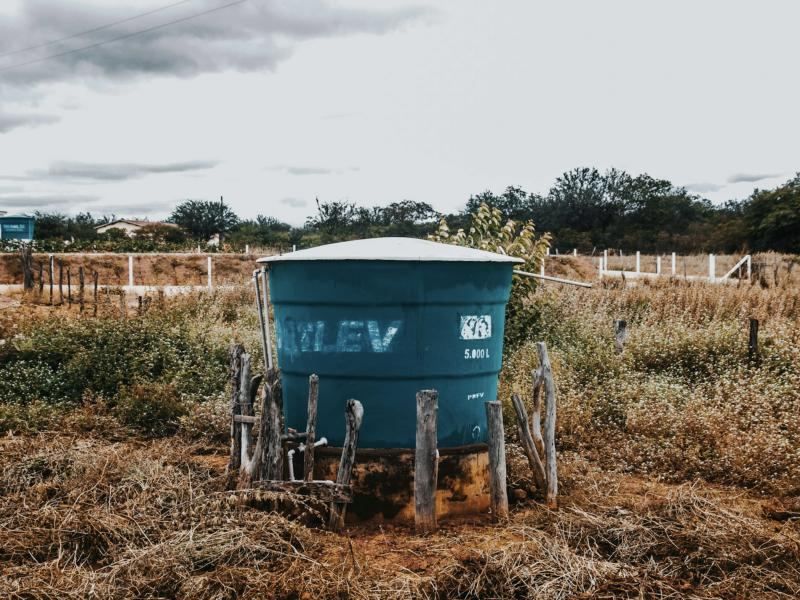
You ring a local supplier, they bring a tanker (*camión cisterna*) and pump the water into your tank. In practice:
- Drinking water comes from an authorised source, in a tanker that’s authorised to carry water for human consumption.
- Non-drinking water (for the garden, the pool, building work) is cheaper and comes from other sources. Make sure you know which you’re getting.
- Access matters. A full tanker is heavy. If it can’t get down your track after rain, you don’t get water. My driveway saga has more on that particular joy.
- Hose length matters too. Ask how far the tanker’s hose reaches, and put the tank’s filler where the truck can park.
The rules for drinking water
Spain’s drinking water regulation, Royal Decree 3/2023, covers water for domestic use whether it comes from the mains, a tanker or a mobile tank, and has specific articles on supply by tanker and on the tankers themselves. Regional health departments authorise the tankers; Murcia, for example, lists a procedure for authorising tankers that transport drinking water.
So ask your supplier whether their tanker is authorised for drinking water, and what source the water comes from. A reputable supplier will tell you without blinking.
What deliveries cost
The guide price I checked this month is about €190 for 10,000 litres. Prices vary with distance, access and whether you need drinking water or not, so get a quote for your own address.
Here’s what that means for a household:
| Daily use | Litres a month | Deliveries a month (10,000 L) | Rough monthly cost |
|---|---|---|---|
| 100 L (very careful) | About 3,000 | One every three months or so | About €60 |
| 150 L | About 4,500 | One every two months or so | About €85 |
| 300 L (family with garden) | About 9,000 | About one a month | About €170 |
Those costs are worked out from the €190 guide price, so treat them as a rough guide. They show why deliveries make sense as a bridge or a top-up, and why a borehole or serious rainwater storage pays off over time.
How big a tank?
The sum is simple:
daily use × days between deliveries + a reserve
The reserve is the part people skip. Tankers break down, suppliers go on holiday in August, and tracks wash out in autumn storms. I’d keep at least a week’s water in reserve at all times.
For our 150 litres a day and a delivery roughly every two months, that’s 150 × 60 = 9,000 litres, plus a week’s reserve of about 1,000 litres. Call it 10,000 litres. If you also want to store winter rainwater for the summer, you need more, or a separate tank.
Bigger tanks also mean you can take full loads, which is usually cheaper per litre than small top-ups.
What tanks cost
You’ll mostly choose between polyethylene tanks (above or below ground) and concrete or fibreglass ones. For drinking water, make sure the tank is food-grade and certified for it.
| Tank | Price | Source |
|---|---|---|
| 2,000 L food-grade tank, above ground | €685 | Obramat |
| 10,000 L drinking-water tank, horizontal, to bury | €3,829.75 | Todo Agricultor |
| 10,000 L drinking-water tank, horizontal, above ground | €4,695.04 | Todo Agricultor |
| Rainwater tank, installed (all sizes) | €1,500–€7,000, average about €2,600 | Habitissimo |
Burying a tank keeps the water cool and dark, which is good for quality, and keeps the garden tidy. But it means a digger, a proper base and backfill, and access for cleaning. Above-ground tanks are cheaper to install, but need shade (or opaque walls) to stop algae and keep the water cool. A big black tank in full sun in July becomes a kettle.
Installing a tank: what’s involved
A tank looks simple until you install one. Here’s what ours needed, and what to plan for:
- A level, solid base. A full 10,000-litre tank weighs ten tonnes. Above-ground tanks need a concrete slab or a compacted, level bed; buried ones need a properly dug hole, a base and careful backfill so the tank doesn’t deform.
- Access for the tanker. The filler pipe needs to be within reach of the lorry’s hose, with somewhere for it to park safely.
- An overflow that goes somewhere sensible, not into the foundations.
- A way in for cleaning. A manhole big enough to climb through, and a drain at the bottom if possible.
- Shade or cover for above-ground tanks.
- A level gauge. A simple float gauge saves endless lifting of lids and peering into the dark.
- Planning. Ask the town hall whether a tank of the size you’re planning needs a licence or prior notice, especially a buried one.
If you’re installing a tank and a pump at the same time, put them close together and the pump in the shade. And fit a filter between the tank and the pump; it’s cheaper than a new pump.
Questions to ask a delivery firm
Before you choose a supplier, ask:
- Is your tanker authorised to carry drinking water? Can I see the authorisation?
- Where does the water come from?
- What’s the price for a full load to my address, and is there a charge for difficult access?
- How far does your hose reach?
- How much notice do you need, especially in summer?
- Do you deliver at weekends or in an emergency?
Keep the numbers of two suppliers. When one is booked up in August, you’ll be glad of the other.
Keeping stored water drinkable
Stored water doesn’t stay perfect on its own. Here’s our routine:
- Keep light out. Algae need light. Opaque tanks, closed lids, shaded positions.
- Keep things out. Screened vents, sealed lids, no gaps for insects, lizards or the occasional curious rat.
- Clean the tank regularly. The Málaga architects’ college note on the 2023 drinking water rules lists periodically cleaning the internal tank among the owner’s responsibilities. We drain, scrub and disinfect ours once a year, before a delivery so it refills straight away.
- Filter and treat at the tap. We run sediment and carbon filters, then UV for the drinking water. My water filtration guide explains the options.
- Test it. Have the water tested by an accredited lab at least once, and again if the taste, smell or colour changes.
- Never mix drinking and non-drinking water in the same tank.

Planning a combined system
Very few off-grid homes rely on a single source. The resilient setup combines two or three, with a tank at the centre. Ours now looks like this:
- The borehole feeds the main tank for the house, through filters.
- The roof feeds a separate rainwater tank for the garden and for cleaning.
- Greywater from the shower and washing machine goes to the fruit trees.
- Deliveries are the fallback, if the pump fails or the aquifer drops in a long drought.
If you’re planning from scratch, work out each source’s contribution through the year. Rain comes in a handful of storms, mostly in autumn and spring; a borehole gives steady water but uses power; deliveries cost money but arrive when you call. A big tank lets you store the autumn rain for the summer and buy fewer deliveries.
The single most useful thing you can do is keep the drinking water separate from the rest. One clean, food-grade tank for the house, filled from your best source, and everything else in other tanks. It makes testing, cleaning and treatment far simpler.
Summer and winter
Water use isn’t flat through the year. In summer, showers are more frequent, the garden is thirsty, and the kids find every hose on the property. In winter, use drops, and if you have a rainwater tank, it might even fill.
Plan your storage around summer, when the risk of running out is highest and when suppliers are busiest. If you’re relying on deliveries, book them before you need them in July and August. Don’t wait for the tank to run low on a Friday afternoon in a heatwave.
Pumps and pressure
Water in a tank isn’t water at the tap. You need a pump and a pressure system, unless the tank sits high enough above the house to feed it by gravity (rare, unless you’re on a slope).
A pressure pump is a significant electrical load in an off-grid house, especially when it starts. Put it on the list when you size your solar, and consider a pump with a soft start or variable speed. Our borehole pump was the hungry one; the soft starter story explains what we did about it.
Making deliveries go further
The cheapest water is the water you don’t use.
- Greywater for the garden. Shower and washing machine water, with plant-safe soaps, can water fruit trees and borders. See my greywater guide.
- Rainwater for non-drinking uses. Even if the roof can’t supply the house, it can fill a garden tank in winter.
- Low-flow fittings. Aerated taps and a decent low-flow shower head make a surprising difference.
- Fix drips. A dripping tap or a running toilet can waste a lot of water over a day.
- Meter it. A cheap water meter after the pump tells you exactly where the water goes. Ours was a revelation.
Questions people ask me
Is delivered water safe to drink?
It can be, if it comes from an authorised source in an authorised tanker and goes into a clean, food-grade tank. Then treat and test it as you would any private supply.
How often do I need a delivery?
Divide your tank’s useful capacity by your daily use. For a 10,000-litre tank and 150 litres a day, about every two months, keeping a reserve.
Can I use pool-fill water for the house?
Only if it’s drinking-quality water and you’re told so. Water sold for pools and gardens may not be.
Do I need permission for a tank?
A tank is a construction, and big or buried ones may need a licence or prior notice to the town hall. Ask before you dig.
Should I fill the pool from deliveries?
You can, but a pool takes a lot of water. At around €190 per 10,000 litres, filling one is a big bill, and in a drought year it may also be frowned on locally.
The bottom line
Deliveries are a perfectly good way to live, especially while you sort out a longer-term source. Get a big enough food-grade tank, keep a reserve, keep it clean, and make sure the truck can reach it. Then work on every other source you can, from the roof to the shower, so the lorry comes less often.


Leave a Reply