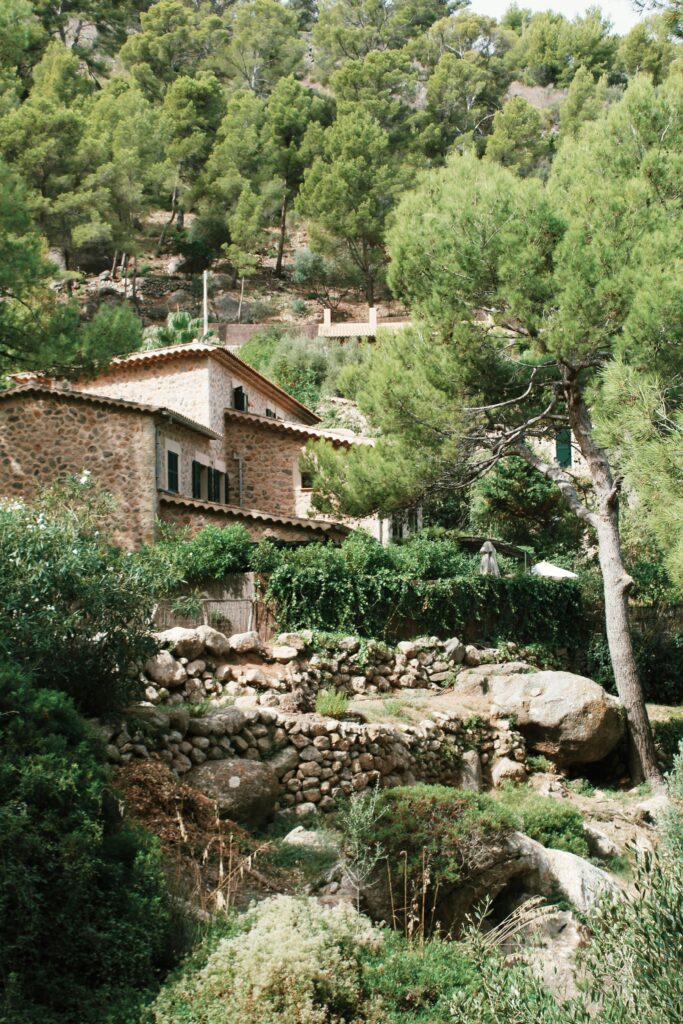
Catalonia’s countryside is full of masies: big stone farmhouses, often centuries old, many of them empty or falling down. If you dream of restoring one and living off-grid, Catalonia has a specific system for it, and it’s quite different from what you’ll find further south.
I live in Alicante, not Catalonia, so this is research rather than experience. I’ve linked every figure to its source. Catalan planning documents are often only in Catalan, so expect your lawyer and architect to work in it.
I’m not a lawyer. Rules change and town halls read them differently. Use this as a map, not as advice for a specific property.
The land rules in Catalonia
Catalonia’s planning law is the consolidated Urban Planning Act (TRLU). Non-developable land (sòl no urbanitzable) is the default: the Barcelona provincial council’s training notes point out that it makes up 94% of Catalonia’s territory.
New houses: tied to farming
Building a new house in the Catalan countryside is very restricted. In practice, new housing on non-developable land is limited to homes genuinely linked to a farming or similar rural activity. A Catalan geography journal describes residential use there as restricted to what’s directly and justifiably tied to farming, livestock, rural tourism or education. If you’re not a farmer, don’t buy land expecting to build.
The masia catalogue
The route most buyers actually use is the catàleg de masies i cases rurals. Each town can draw up a catalogue of the old farmhouses and rural houses on its land that deserve to be preserved, under article 47.3 of the TRLU. Being in the catalogue is what unlocks the right to restore the building and use it as a home.
Lleida’s catalogue is a good example of what it allows. Catalogued buildings can be rebuilt and restored, extended by 10–20% where justified, and given set new uses. The same presentation shows how selective the process is: Lleida started from about 9,000 rural buildings and initially picked 115.
So the first question for any masia is simple: is it in the town’s catalogue? If it is, you have a path to restoring it. If it isn’t, find out why, and what you’d be allowed to do, before you sign anything.
Houses that aren’t catalogued
Existing houses on non-developable land that aren’t in the catalogue aren’t automatically doomed. The current law provides that pre-existing buildings used as homes can remain in that use under certain conditions. But the scope for works is much narrower, so you’re buying a house to maintain, not to transform. An architect’s written opinion is essential here.
Purchase tax and buying costs
Catalonia has the highest transfer tax in mainland Spain: a general rate of 10%, rising to 13% in the top bands, with a reduced 5% for some young buyers and large families. That’s €20,000 on a €200,000 masia before fees. Restoring a masia costs serious money too, so build both into your budget from day one.
Sun and power
Catalonia gets less winter sun than the south, and that changes how big an off-grid system needs to be.
| Place | Winter output per kW of panels | Summer output per kW |
|---|---|---|
| Lleida (inland plain) | 2.39 kWh a day | 7.57 kWh a day |
| Figueres (Empordà) | 2.24 kWh a day | 6.61 kWh a day |
| Lloret de Mar (Costa Brava) | 2.45 kWh a day | 7.16 kWh a day |
Allowing 20% for losses, a household needing 10 kWh a day in winter would want about 5.2 kWp of panels around Lleida (ten 550 W panels) and about 5.6 kWp in the Empordà (eleven). Our system in Alicante would give roughly 9–10 kWh a day in a Lleida winter, against about 11 at home. In the Pyrenees and pre-Pyrenees, valleys lose winter sun behind mountains for hours, so a site survey matters more than any regional figure.
Catalan winters inland are properly cold. Heat with wood or pellets rather than electricity unless you’re prepared to build a much bigger system; my guide to heating an off-grid home covers the options, and a backup generator is more likely to earn its keep here than in the south. See do you need a generator?
Water
Catalonia’s internal river basins are managed by the Agència Catalana de l’Aigua (ACA); the western part of the region, including most of Lleida province, drains to the Ebro, managed by the Confederación Hidrográfica del Ebro. Which one you deal with for a borehole depends on where the plot is.
Old masies often have their own wells, springs or cisterns. Ask whether they’re registered and whether they still give water in late summer. My guide to borehole permits sets out the paperwork, and rainwater harvesting works better in wetter northern Catalonia than it does where I live.
Waste
A restored masia needs a proper wastewater system, and it’s usually part of the works the town will want to see in the restoration project. My guide to septic tank rules explains the options and when you need a discharge permit.
What I’d check before buying in Catalonia
- Is the masia in the catalogue? Get the catalogue entry (fitxa) and read what it allows.
- What’s original and what’s been added. Additions outside the catalogued volume are where trouble starts.
- Structural condition. Roofs and stone walls are expensive. Get a building survey before you commit.
- Access and services. Old masies were built for mules, not lorries.
- Water source and its paperwork.
- The full budget: 10% or more in tax, plus restoration, plus an off-grid system sized for a northern winter.
What it costs to set up here
Here’s a rough set-up budget for an off-grid house in Catalonia, assuming a €150,000 resale purchase. The system prices are national figures I’ve checked, so get local quotes before you rely on them.
| Item | Typical cost |
|---|---|
| Purchase tax (10% on €150,000) | €15,000 |
| Off-grid solar kit, 9.6 kWh lithium, 5 kW inverter (equipment only) | €3,600–€3,700 |
| Installing and legalising the solar system | Legalisation from about €600; installation on top |
| Rainwater tank, installed | €1,500–€7,000 |
| Borehole, if you need one | €1,800–€15,000 |
| Septic tank (tank only) | €900–€5,000, plus fitting from €1,500 and licences of €500–€2,000 |
| Or a small treatment plant, installed | €2,000–€4,000 |
| Starlink internet | From €35 a month, plus a €10 monthly kit fee for new customers |
For a household using about 10 kWh a day, the winter figures above point to ten to eleven 550 W panels (around 5.2–5.6 kWp), so the kit in the table would need more panels added. Restoring a masia usually costs more than any of these systems, so get a building survey and a restoration estimate before you add up the rest. For running costs once you’ve moved in, see first-year costs of living off-grid.
Heating, cooling and the seasons
Inland Catalonia has proper winters, and the Pyrenees and pre-Pyrenees bring snow and long cold spells. Heating is the biggest energy question here, and doing it with electricity off-grid means a very large system. Most people restoring masies heat with wood or pellets, and thick stone walls hold that heat well once the house is warm.
Summers on the coast and the inland plains can be hot and humid, but cooling needs are smaller than in the south. A masia’s thick walls and small windows were designed for exactly this climate, so work with them when you restore rather than against them.
Internet
Coverage in rural Catalonia varies from valley to valley. Check the 4G coverage map, then test your phone at the property at different times of day. Where 4G is weak, Starlink works almost anywhere with a clear view of the sky. Remember that routers and dishes run all night, so include them in your power budget. My internet guide compares the options.
Buying in Catalonia, step by step
- Get the cadastral reference and look at the Catastro record. My guide shows four ways to find it.
- Order a nota simple from the Land Registry and compare it with the Catastro and with what’s actually there.
- Check whether the masia is in the town’s catalogue, and read its entry (fitxa).
- Compare the catalogued volume with what’s actually standing. Additions outside it are where trouble starts.
- Get a building survey: roofs and stone walls are the big costs.
- Check access, water source and the full budget, including the 10% or higher purchase tax.
- Pay an architect for a site visit before the deposit contract, and get a written opinion.
- Have a lawyer write conditions into the deposit contract so you can walk away if the checks fail.
- Sign at the notary, pay the purchase tax, and register the property in your name.
The general checks are covered in checks before buying rural land, and if the property is half fallen down, read buying a ruin step by step as well.
Who to talk to
You’ll deal with the same handful of offices wherever you buy, but it helps to know who does what:
- The town hall’s planning department (urbanismo): the land category, licences, and a written planning report on the plot.
- The Land Registry (Registro de la Propiedad): the nota simple, which shows owners, debts and charges.
- The Catastro: the official description of the land and buildings for tax.
- The water authority, here the Agència Catalana de l’Aigua or the Ebro authority: boreholes, wells and discharges.
- The regional industry department, here the Generalitat de Catalunya’s industry department: registering the solar installation’s electrical certificate, usually done by your installer.
- A notary: signs the deed. Notaries check identities and paperwork, not the property itself.
A local architect and a property lawyer will deal with most of these for you, which is the main reason to hire them early.
Mistakes I’d avoid here
- Buying a masia without checking the catalogue entry first.
- Underestimating restoration costs for roofs and stone walls.
- Sizing solar on southern figures; Catalan winters need a bigger system.
- Forgetting the 10% or higher purchase tax in the budget.
Quick facts
| Planning law | TRLU (consolidated Urban Planning Act) |
| New house on rustic land | Essentially only when tied to a genuine rural activity |
| Restoring an old farmhouse | Through the town’s masia catalogue (TRLU art. 47.3) |
| Purchase tax (resale) | 10%, up to 13% in top bands |
| Winter solar, per kW of panels | About 2.2–2.5 kWh a day |
| Water authorities | ACA (internal basins); Ebro in the west |
The supplier directory doesn’t cover Catalonia yet. You’ll find the provinces we cover on the directory page.
Questions people ask me
Can I buy a ruined masia and rebuild it?
If it’s in the town’s catalogue, usually yes, within the limits the catalogue sets. If it isn’t, rebuilding a ruin as a home is very unlikely to be allowed. Check before you buy, not after. My guide to buying a ruin step by step covers the general process.
Why is the tax so high?
Each region sets its own transfer tax rate, and Catalonia has chosen a higher one. There’s nothing you can do about it except budget for it.
Is off-grid solar realistic this far north?
Yes, but you’ll need more panels and more storage than in the south, and probably a wood or pellet stove for heat.
Can I turn a catalogued masia into holiday lets?
The catalogue sets out the uses allowed for each building, which can include rural tourism. Read the entry, then check the tourism registration rules.
Is it better to stay grid-connected in Catalonia?
If there’s a grid connection nearby, it’s worth pricing against a fully off-grid system, given the weaker winter sun. Many people add solar to a grid connection instead.
Can I extend a masia?
Lleida’s catalogue allows extensions of 10 to 20% where justified, but each town sets its own rules. Check the catalogue entry for the building.
The short version
Catalonia doesn’t let you build freely in the countryside, but its masia catalogue gives a clear route to restoring old farmhouses. Find out whether the building is catalogued before anything else. Budget for the highest purchase tax on the mainland and for a solar system sized for a northern winter.
Leave a Reply