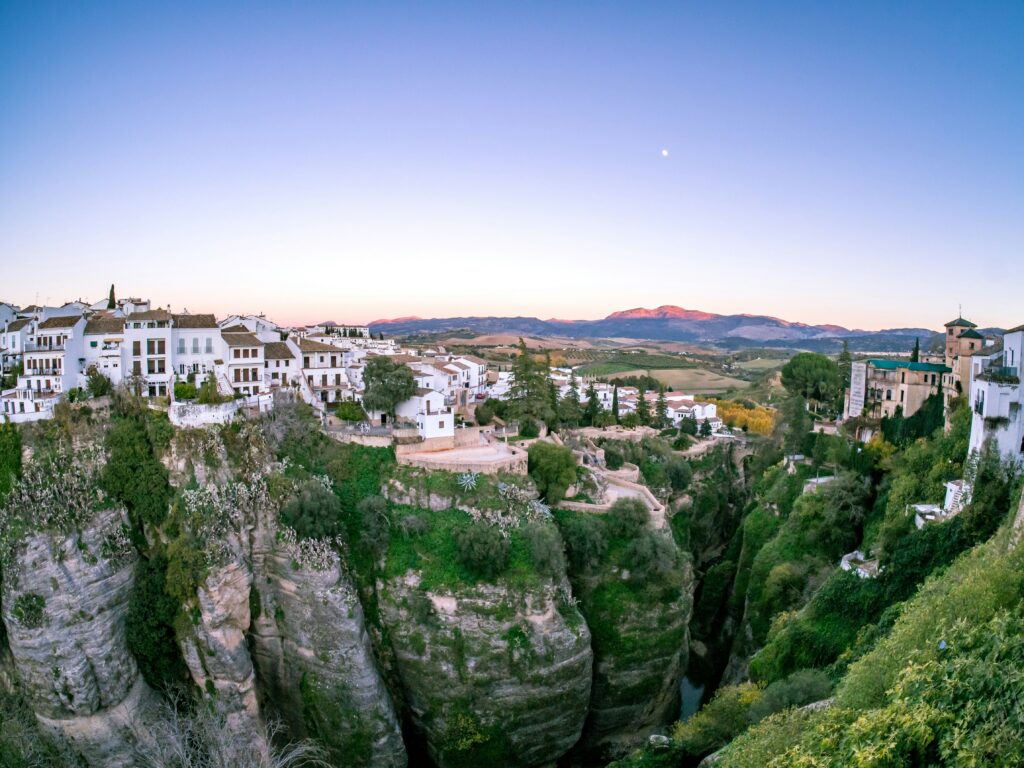
Andalucía is where a lot of people’s off-grid dream starts: a whitewashed cortijo, an olive grove, a view down a valley with nothing in it but goats. It’s also the region that has done the most work, legally, on what to do about the thousands of country houses that were built without permission.
I live in inland Alicante, not Andalucía, so this guide isn’t a diary. It’s the research I’d want if I were buying there: the land rules, the purchase tax, how much sun you really get in winter, and who to talk to about water. Every figure is linked to where I found it.
I’m not a lawyer. Rules change and town halls read them differently, so treat this as the map and get a local lawyer and architect to walk the ground with you.
The land rules in Andalucía
Andalucía’s planning law is the LISTA, Ley 7/2021 and its general regulation, Decree 550/2022. It divides land into urban and rustic, and most off-grid property sits on rustic land.
Can you build a new house on rustic land?
Sometimes, which is more than you can say for many regions. The LISTA allows a detached house that isn’t tied to farming as an “extraordinary action” on rustic land, but the conditions are tight. A technical note from the Málaga architects’ college sums them up: a minimum plot of 2.5 hectares (5 hectares on forest land), one house per plot, at least 100 metres from other houses, and the building covering no more than 1% of the plot.
So on a 2.5-hectare plot, that’s a house of about 250 m² of footprint at most. It also has to be ordinary rustic land, not specially protected land. A specialist legal guide puts the starting point plainly: not all rustic land admits a detached house, so the first check before any purchase is the plot’s exact category in the town’s plan.
Existing houses built without a licence
This is the bigger issue for most buyers. In Andalucía, once six years have passed since an unlicensed house was finished, the council can usually no longer order it demolished, and the house can be declared AFO. That lets you register it and connect supplies, but it doesn’t make it fully legal, and it limits what you can build afterwards. Protected land never gets the benefit of the clock.
I’ve written a full guide to legalising a rustic house (AFO and DAFO), with costs. If the house you’re looking at has extensions, a pool or a casita that don’t appear in the Catastro, read it before you make an offer.
Purchase tax and buying costs
When you buy a resale house in Spain you pay transfer tax (ITP), and each region sets its own rate. Andalucía is one of the cheaper ones: a general rate of 7%, with a reduced 3.5% for some young buyers and large families. On a €200,000 finca that’s about €14,000 in tax before notary, registry and lawyer’s fees.
Budget separately for the paperwork that rustic property needs and town houses don’t: a survey, an architect’s report on what’s legal, and possibly an AFO application. My guide to checks before buying rural land lists them in order.
Sun and power
Andalucía has the best solar resource on the mainland, but winter still bites. The figure that matters for an off-grid system is how much a kilowatt of panels gives you per day in winter, because that’s when you run short.
| Place | Winter output per kW of panels | Summer output per kW |
|---|---|---|
| Seville (Guadalquivir valley) | 2.88 kWh a day | 8.25 kWh a day |
| Antequera (inland Málaga) | 2.92 kWh a day | 8.22 kWh a day |
| El Ejido (Almería coast) | 3.29 kWh a day | 7.60 kWh a day |
Using my usual 20% allowance for losses, a household that needs 10 kWh a day in winter would want about 4.3 kWp of panels near Seville (eight 550 W panels) and about 3.8 kWp on the Almería coast (seven). That’s a little less than I need in inland Alicante. Mountain areas like the Alpujarras or the Sierra de Aracena get more cloud and shade, so ask an installer to model your actual site.
Summer is the other problem. Andalusian summers are long and hot, and panels lose output as they heat up. If you want air-conditioning into the night, size the batteries for it. My guides to solar sizing and costs and batteries do the sums.
Water
Water is the thing I’d worry about most in Andalucía. Much of the region sits in the Guadalquivir basin, managed by the Confederación Hidrográfica del Guadalquivir, which is who you deal with for a new borehole or for registering an old one. The coastal basins are managed by the Junta de Andalucía.
Don’t assume a well on the plot is legal or wet. Ask for the registration paperwork, and if there’s none, read my guide to borehole permits before you count on it. Many off-grid households combine a tank, rainwater and deliveries; my guide to water deliveries and storage tanks covers what that costs.
Waste
A rustic house needs its own wastewater system, and in an AFO file the council will want to know what it is. A sealed tank that’s emptied by truck, a septic tank with a discharge permit, or a small treatment plant are the usual options. My guide to septic tank rules explains which needs a permit and what fitting costs.
What I’d check before buying in Andalucía
- The land category. Ordinary rustic or specially protected? Ask the town hall for a written planning report.
- What’s registered against what’s built. Compare the Catastro, the Land Registry entry and what’s standing there. Extras that aren’t registered are where the trouble is.
- The age of anything unlicensed. Six years since completion on ordinary rustic land is the key date for an AFO.
- Water rights in writing. A borehole registration or a contract, not a seller’s word.
- Access. Will a delivery lorry, a septic truck and a fire engine get down the track after rain?
- Fire risk. Many Andalusian fincas sit in dry scrub and pine. Ask about firebreaks and clearance obligations.
What it costs to set up here
Here’s a rough set-up budget for an off-grid house in Andalucía, assuming a €150,000 resale purchase. The system prices are national figures I’ve checked, so get local quotes before you rely on them.
| Item | Typical cost |
|---|---|
| Purchase tax (7% on €150,000) | €10,500 |
| Off-grid solar kit, 9.6 kWh lithium, 5 kW inverter (equipment only) | €3,600–€3,700 |
| Installing and legalising the solar system | Legalisation from about €600; installation on top |
| Rainwater tank, installed | €1,500–€7,000 |
| Borehole, if you need one | €1,800–€15,000 |
| Septic tank (tank only) | €900–€5,000, plus fitting from €1,500 and licences of €500–€2,000 |
| Or a small treatment plant, installed | €2,000–€4,000 |
| Starlink internet | From €35 a month, plus a €10 monthly kit fee for new customers |
For a household using about 10 kWh a day, the winter figures above point to eight 550 W panels (around 4.3 kWp), so the kit in the table would need more panels added. Water is the line most likely to blow the budget here, so price a borehole or deliveries before you commit. For running costs once you’ve moved in, see first-year costs of living off-grid.
Heating, cooling and the seasons
Andalucía’s problem is heat, not cold, though inland towns at altitude, like those around Granada or in the Sierra de Aracena, have properly cold winter nights. In the Guadalquivir valley, plan the house around summer: shade on the south and west, thick walls, and closing up shutters from late morning. Night-time ventilation does a lot of the cooling for free.
When you do run air-con, run it hard in the afternoon while the panels are producing, so the house is cool before the sun goes down. That’s far easier on a battery than cooling from scratch at 9pm. A wood stove or a small heat pump covers the few genuinely cold weeks.
Internet
Coverage in rural Andalucía varies from valley to valley. Check the 4G coverage map, then test your phone at the property at different times of day. Where 4G is weak, Starlink works almost anywhere with a clear view of the sky. Remember that routers and dishes run all night, so include them in your power budget. My internet guide compares the options.
Buying in Andalucía, step by step
- Get the cadastral reference and look at the Catastro record. My guide shows four ways to find it.
- Order a nota simple from the Land Registry and compare it with the Catastro and with what’s actually there.
- Check the land category in the town’s plan: ordinary rustic land or specially protected.
- If anything was built without a licence, find out when it was finished. Six years since completion is the key date for an AFO on ordinary rustic land.
- Ask the seller for any AFO resolution, licences and supply contracts.
- Check water: a registered borehole with the Guadalquivir authority, or a realistic plan B.
- Pay an architect for a site visit before the deposit contract, and get a written opinion.
- Have a lawyer write conditions into the deposit contract so you can walk away if the checks fail.
- Sign at the notary, pay the purchase tax, and register the property in your name.
The general checks are covered in checks before buying rural land, and if the property is half fallen down, read buying a ruin step by step as well.
Who to talk to
You’ll deal with the same handful of offices wherever you buy, but it helps to know who does what:
- The town hall’s planning department (urbanismo): the land category, licences, and a written planning report on the plot.
- The Land Registry (Registro de la Propiedad): the nota simple, which shows owners, debts and charges.
- The Catastro: the official description of the land and buildings for tax.
- The water authority, here the Confederación Hidrográfica del Guadalquivir, or the Junta for the coastal basins: boreholes, wells and discharges.
- The regional industry department, here the Junta de Andalucía’s industry department: registering the solar installation’s electrical certificate, usually done by your installer.
- A notary: signs the deed. Notaries check identities and paperwork, not the property itself.
A local architect and a property lawyer will deal with most of these for you, which is the main reason to hire them early.
Mistakes I’d avoid here
- Assuming a house is legal because it’s in the Catastro and has a meter.
- Buying a small plot to build on, when a detached house needs at least 2.5 hectares.
- Sizing solar for winter but forgetting the battery load of summer cooling.
- Counting on a well that isn’t registered or runs dry in August.
Quick facts
| Planning law | LISTA (Ley 7/2021) and its regulation (Decree 550/2022) |
| New house on rustic land | Possible on ordinary rustic land: 2.5 ha minimum (5 ha forest), 1% occupation |
| Unlicensed houses | AFO route usually open after 6 years, not on protected land |
| Purchase tax (resale) | 7% general |
| Winter solar, per kW of panels | About 2.9–3.3 kWh a day |
| Main water authority | Confederación Hidrográfica del Guadalquivir |
Looking for firms? The directory lists solar installers in Almería, Granada and Málaga, plus property lawyers in Málaga.
Questions people ask me
Is Andalucía easier than Valencia for buying a country house?
In one important way, yes. Andalucía still has a time limit after which an unlicensed house on ordinary rustic land can be declared AFO. In the Valencian Community there’s no longer a time limit on rustic land at all. That doesn’t make every Andalusian cortijo safe, but it gives you a route.
Can I build a small house on a one-hectare plot?
Not as a detached house that isn’t tied to farming: the regional minimum is 2.5 hectares, and the town’s plan can ask for more. A house linked to a genuine farming business follows different rules, so talk to an architect about your actual plans.
Do I need air-conditioning?
In the Guadalquivir valley in July, most people would say yes. Start with the building, though: thick walls, shade and closing up in the heat of the day do half the work for free. My guide to air-con off-grid covers the power side.
Where’s the cheapest place to buy?
I don’t track property prices, and they move quickly. What I’d say is that cheap often means far from water, far from services or with legal problems, and those are what cost you later.
Is it too hot to live off-grid in Andalucía in summer?
No, but it changes how you design the system. Size the batteries for evening cooling, put them somewhere shaded and ventilated, and use the building to keep heat out.
Can I rent out an off-grid cortijo to tourists?
Possibly, but tourist lets have their own registration rules, and the house’s legal status matters. Sort the planning position first, then ask the town hall and the regional tourism register.
Is the Alpujarras good for off-grid living?
It’s popular for it, with springs and terraces, but the mountains cut winter sun in many valleys and access can be steep. Check the winter shading on the actual plot.
The short version
Andalucía is sunny, has a relatively low purchase tax and, unlike its neighbour to the east, still offers a route for older unlicensed houses. Building new on rustic land is possible but needs a big plot. Water is the constraint I’d take most seriously. Do the paperwork before you fall in love with the view.
Leave a Reply