
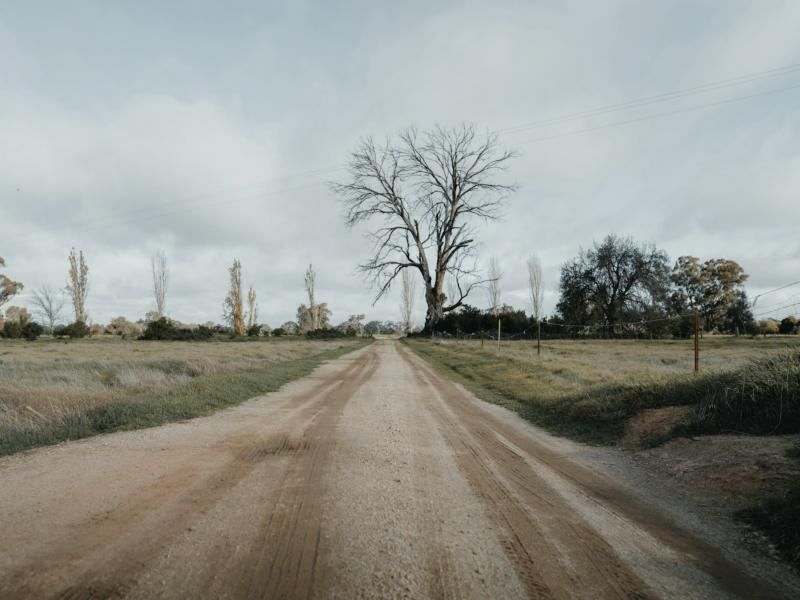
This is my region. We rented on the Valencia coast when we first came to Spain in 2019, and in spring 2025 we bought a semi-abandoned finca in inland Alicante, near Hondón. So this guide is half research and half things I learned the hard way.
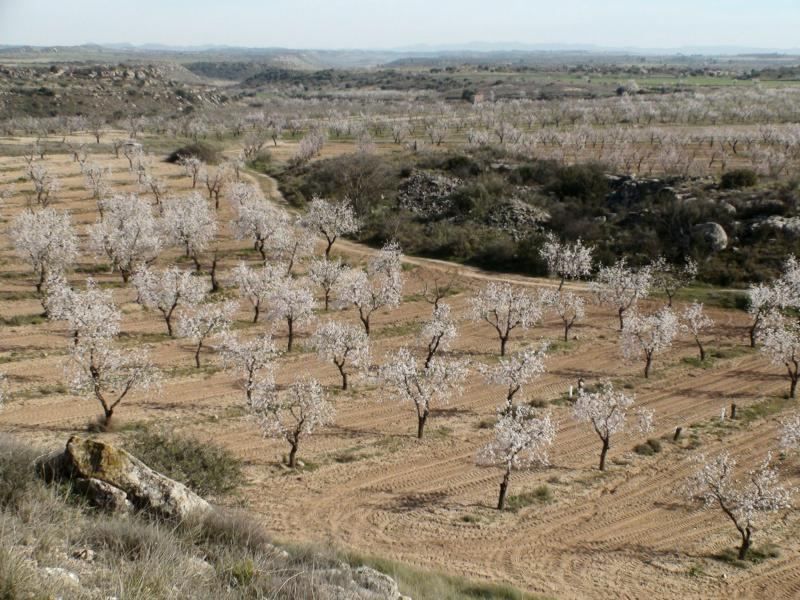
The Valencian Community covers three provinces: Castellón in the north, Valencia in the middle and Alicante in the south. The coast is wall-to-wall development; inland, behind the first range of hills, it empties fast into almond terraces, vineyards and pine. That’s where most off-grid property is.
I’m not a lawyer. Rules change and town halls read them differently. Treat this as the map, then get a local lawyer and architect to walk the ground with you.
The land rules here are strict
The Valencian planning law is the TRLOTUP, the consolidated text approved by Decreto Legislativo 1/2021. Rustic land is called suelo no urbanizable, and it’s treated as land that isn’t for houses unless the rules make an exception.
No clock on illegal building
This is the single most important thing to know. In many regions, once enough years pass after an unlicensed building is finished, the council loses the power to demolish it. Not here. Since a 2019 reform, there’s no time limit on the council’s action against unlicensed building on rustic land. I explain the history and the sources in my guide to legalising a rustic house.
In practice, that means an unlicensed extension, casita or pool on a Valencian finca doesn’t become safe with age. When we were looking, I treated every “the previous owner added that” as a question for the architect, not a selling point.
The minimisation route for older houses
What the region offers instead is minimización de impacto territorial, a procedure to regularise houses on rustic land by reducing their impact, mostly by sorting out their wastewater. El Campello’s town hall publishes a clear summary of the conditions: it applies to houses completely finished before 20 August 2014, and groups of houses at a density of three or more per hectare are treated together as a cluster.
The Generalitat has published a guide to the minimisation procedure in Spanish. If the house you’re looking at isn’t fully licensed, the questions are: can you prove it was finished before August 2014, is the town running a minimisation plan for the area, and what will the wastewater work cost?
Building new
Building a new house on rustic land here is hard, and depends heavily on the town’s plan. Before you buy a plot to build on, get a written planning report (informe urbanístico or cédula urbanística) from the town hall that says what can be built on that exact parcel. My guide to what you can build on rustic land covers the general picture.
Purchase tax and buying costs
The Valencian Community cut its transfer tax this year. Since 1 June 2026, the general rate for resale property is 9% up to €1 million and 11% above that. Some young buyers can use a reduced 6% rate. On a €200,000 finca, 9% is €18,000 before fees, so it’s still one of the dearer regions to buy in.
Sun and power
The southern half of the region gets excellent sun. Here’s what a kilowatt of panels gives you per day, according to an analysis based on NASA weather data:
| Place | Winter output per kW of panels | Summer output per kW |
|---|---|---|
| Alicante | 2.89 kWh a day | 7.54 kWh a day |
| Jávea (Marina Alta) | 2.96 kWh a day | 7.47 kWh a day |
| Biar (inland Alicante) | 2.82 kWh a day | n/a |
Our nine 550 W panels (just under 5 kWp) give us roughly 11 kWh a day on a decent winter day after losses, and much less in a week of cloud. With a 10 kWh lithium battery and no generator, we live within that by heating with wood and cooking mostly on gas. If you want an all-electric house with air-con into the night, you’ll need a much bigger system. My guide to solar sizing and costs has the full worked example.
Inland Castellón and the high plateau west of Valencia (towards Requena and Utiel) are colder and greyer in winter, so size more generously there.
Water
Most of the region drains to the Júcar basin, managed by the Confederación Hidrográfica del Júcar; the far south of Alicante drains to the Segura, managed by the Confederación Hidrográfica del Segura. One of them is who you deal with for a borehole, depending on where the plot is.
Our old well was dry. We started with a rainwater tank, greywater and deliveries, then drilled a borehole in summer 2025, with a 1.1 kW pump on a soft starter. The paperwork side is in my guide to borehole permits, and the bridging months are in water deliveries and storage tanks. Well water inland is often hard and high in nitrates, so budget for filtration too.
Waste
Wastewater is at the heart of Valencian regularisation, so it matters even more here than elsewhere. We used a composting toilet at first, then fitted a septic tank for the house. My guide to septic tank rules explains what needs a permit, and septic tanks vs compost toilets compares the two.
What I’d check before buying here
- Every building on the plot against the licences. With no time limit on rustic land, anything unlicensed is a live risk.
- The completion date of the house. Before 20 August 2014 matters for minimisation. Old aerial photos and the Catastro are the usual evidence.
- Whether the town has a minimisation plan. Some do; many don’t yet.
- The wastewater system. What is it, is it legal, and what would it take to bring it up to standard?
- Water source. A registered borehole, a share in an irrigation community, or nothing?
- Winter access and fire risk. Inland pine areas burn. Ask about clearance obligations.
What it costs to set up here
Here’s a rough set-up budget for an off-grid house in the Valencian Community, assuming a €150,000 resale purchase. The system prices are national figures I’ve checked, so get local quotes before you rely on them.
| Item | Typical cost |
|---|---|
| Purchase tax (9% on €150,000) | €13,500 |
| Off-grid solar kit, 9.6 kWh lithium, 5 kW inverter (equipment only) | €3,600–€3,700 |
| Installing and legalising the solar system | Legalisation from about €600; installation on top |
| Rainwater tank, installed | €1,500–€7,000 |
| Borehole, if you need one | €1,800–€15,000 |
| Septic tank (tank only) | €900–€5,000, plus fitting from €1,500 and licences of €500–€2,000 |
| Or a small treatment plant, installed | €2,000–€4,000 |
| Starlink internet | From €35 a month, plus a €10 monthly kit fee for new customers |
For a household using about 10 kWh a day, the winter figures above point to eight 550 W panels (around 4.2 kWp), so the kit in the table would need more panels added. Inland Alicante and Valencia are dry, so treat water as a first-order cost, as we had to. For running costs once you’ve moved in, see first-year costs of living off-grid.
Heating, cooling and the seasons
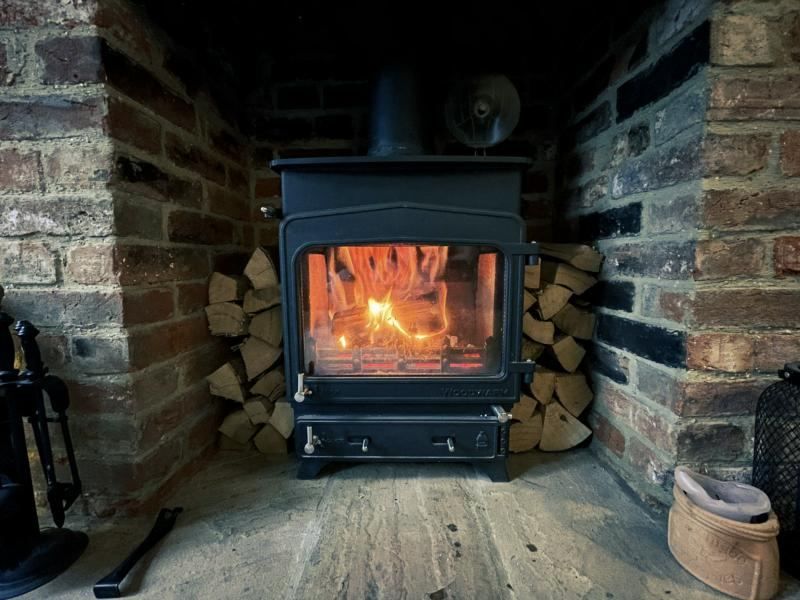
The coast is mild, but inland Alicante, the Valencia plateau and inland Castellón get real winters, with frosty nights. We heat with wood, and it does most of the work from November to March. On a clear winter day the sun through the south windows helps too, which is one reason I’d always check which way a house faces.
Summers inland are hot and dry. Our approach is shutters closed by late morning, windows open at night, and a split air-con unit used in the afternoon when the panels are producing. My guide to passive solar design explains why the building does half the job.
Internet
Coverage in rural the Valencian Community varies from valley to valley. Check the 4G coverage map, then test your phone at the property at different times of day. Where 4G is weak, Starlink works almost anywhere with a clear view of the sky. Remember that routers and dishes run all night, so include them in your power budget. My internet guide compares the options.
Buying in the Valencian Community, step by step
- Get the cadastral reference and look at the Catastro record. My guide shows four ways to find it.
- Order a nota simple from the Land Registry and compare it with the Catastro and with what’s actually there.
- Check every building on the plot against its licence. With no time limit on rustic land, anything unlicensed is a live risk.
- Prove when the house was finished. Before 20 August 2014 matters for minimisation.
- Ask the town hall whether a minimisation plan covers the area, and what the wastewater works would involve.
- Check the water source and its registration with the Júcar or Segura authority.
- Pay an architect for a site visit before the deposit contract, and get a written opinion.
- Have a lawyer write conditions into the deposit contract so you can walk away if the checks fail.
- Sign at the notary, pay the purchase tax, and register the property in your name.
The general checks are covered in checks before buying rural land, and if the property is half fallen down, read buying a ruin step by step as well.
Who to talk to
You’ll deal with the same handful of offices wherever you buy, but it helps to know who does what:
- The town hall’s planning department (urbanismo): the land category, licences, and a written planning report on the plot.
- The Land Registry (Registro de la Propiedad): the nota simple, which shows owners, debts and charges.
- The Catastro: the official description of the land and buildings for tax.
- The water authority, here the Júcar or Segura basin authority: boreholes, wells and discharges.
- The regional industry department, here the Generalitat’s industry department: registering the solar installation’s electrical certificate, usually done by your installer.
- A notary: signs the deed. Notaries check identities and paperwork, not the property itself.
A local architect and a property lawyer will deal with most of these for you, which is the main reason to hire them early.
Mistakes I’d avoid here
- Believing an old unlicensed extension is safe because of its age. On rustic land here, it isn’t.
- Missing the 20 August 2014 cut-off for minimisation.
- Underestimating the cost of bringing wastewater up to standard.
- Forgetting the purchase tax is still 9% after the cut.
Quick facts
| Planning law | TRLOTUP (Decreto Legislativo 1/2021) |
| Unlicensed building on rustic land | No time limit on the council’s action |
| Regularisation route | Minimisation, for houses finished before 20 August 2014 |
| Purchase tax (resale) | 9% up to €1m, 11% above (from 1 June 2026) |
| Winter solar, per kW of panels | About 2.8–3.0 kWh a day in Alicante |
| Water authorities | Júcar; Segura in the far south |
The directory covers all three provinces: see solar installers in Alicante, Valencia and Castellón, borehole drillers in Alicante and property lawyers in Alicante.
Questions people ask me
A seller says the extension is “too old to be a problem”. True?
Not on rustic land in the Valencian Community. There’s no longer a time limit there. Ask what licence covers it, and if there isn’t one, ask an architect whether minimisation or another route applies before you agree a price.
Is inland Alicante cold in winter?
Colder than the coast, and the nights can be properly chilly. We heat with wood, and my guide to heating an off-grid home shows what that looks like.
Do I need a generator?
We don’t have one. It depends how much risk of running out you’ll accept, and my guide to off-grid generators sets out both sides.
Is Starlink worth it inland?
For us, yes: we work from home and 4G is patchy. My internet guide compares the options.
Is the new 9% tax rate permanent?
It’s the rate in force since 1 June 2026 for property up to €1 million. Tax rates can change with each regional budget, so check the current rate before you sign.
Can I add a pool to a finca on rustic land?
Only if the planning rules for that land allow it and you get a licence. Don’t assume; ask the town hall before you buy if a pool matters to you.
Is it better to buy inland or near the coast?
Inland gives you space and cheaper land, but colder winters and longer drives. The coast is milder but crowded and more regulated. We chose inland and haven’t regretted it.
The short version
The Valencian Community has great sun, beautiful inland country and some of the strictest rules in Spain on rustic land. Time doesn’t fix an illegal building here, so the paperwork matters more than the view. Get an architect to check every building on the plot, find out whether the house predates August 2014, and budget for wastewater.
Leave a Reply