
Murcia starts just over the hills from us. It’s one of the sunniest corners of Europe, it has a relatively low purchase tax, and away from the coast and the market gardens there’s a lot of dry, empty country with old farmhouses scattered across it.
It’s also the driest region on the mainland, and that shapes everything about living off-grid there. This guide covers the land rules, the tax, the sun and, above all, the water.
I’m not a lawyer. Rules change and town halls read them differently. Use this as a map, then get a local lawyer and architect to walk the ground with you.
The land rules in Murcia
Murcia’s planning law is the Ley 13/2015 de ordenación territorial y urbanística, usually called the LOTURM. It has been amended several times since, most recently by Decreto-ley 3/2026 in July this year, so make sure whoever advises you is working from the current text.
Building a house tied to a farm
Murcia’s law is unusually specific about farmhouses. To authorise a house tied to a working farm on protected or “unsuitable for development” rustic land, the farm must be at least 20,000 m². On irrigated land in the “unsuitable” category, the minimum drops to 10,000 m², or 5,000 m² if the plot was created by public deed before 17 June 2001.
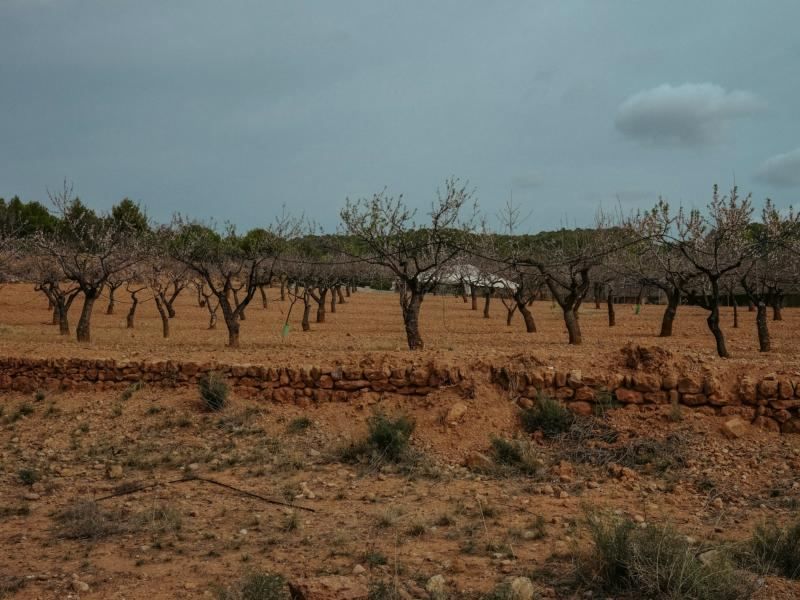
The key words are “tied to the productive activity”. This is a route for genuine farmers, not for someone who wants a house in the country with a few almond trees. If that’s your plan, ask an architect what the town’s plan allows on your exact plot before you buy.
Existing houses
Plenty of Murcian country houses have extensions, pools or whole buildings that were never licensed. The questions are the same as anywhere: how long does the council have to act, does that limit apply to this land, and is there a procedure to recognise the building? My guide to legalising a rustic house explains the AFO idea and the checks to make; get a local lawyer to confirm how Murcia applies it to the house you’re looking at.
Purchase tax and buying costs
Murcia charges a flat 7.75% transfer tax on resale property, with a reduced 3% for some young buyers and large families. That’s about €15,500 on a €200,000 house, noticeably less than in the Valencian Community next door.
Sun and power
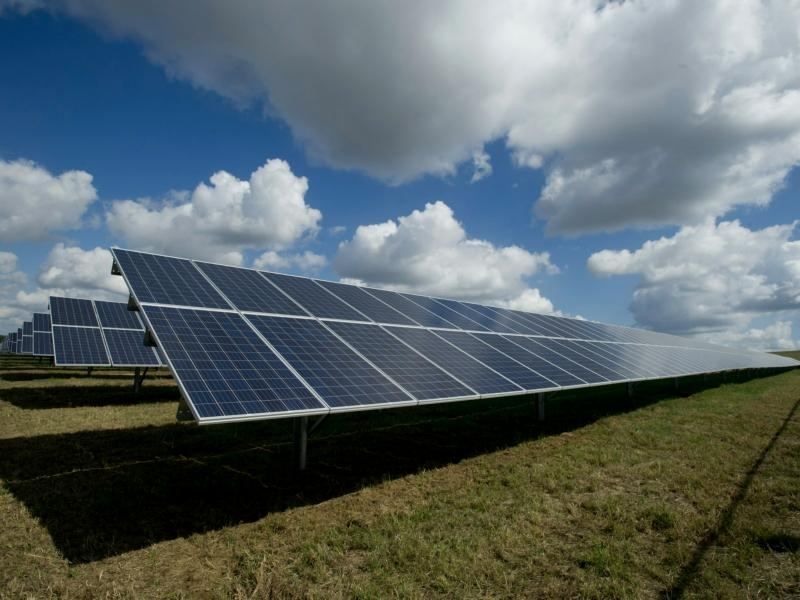
Murcia is excellent solar country, and even the winter figures are among the best in Spain:
| Place | Winter output per kW of panels | Summer output per kW |
|---|---|---|
| Lorca (inland) | 3.01 kWh a day | 7.76 kWh a day |
| San Javier (Mar Menor) | 3.04 kWh a day | 7.33 kWh a day |
| Murcia city | n/a | 7.77 kWh a day |
With my usual 20% allowance for losses, a household needing 10 kWh a day in winter would want roughly 4.2 kWp of panels around Lorca: eight 550 W panels. Our own system in Alicante would give a little more here than it does at home.
The challenge in Murcia is summer heat, not winter sun. Hot panels produce less, batteries dislike heat, and you’ll probably want to cool the house. Put the batteries somewhere shaded and ventilated, and size them for the evening load. My guides to batteries and air-con off-grid go into it.
Water: the real question
Almost all of Murcia lies in the Segura basin, managed by the Confederación Hidrográfica del Segura. Water in the Segura basin is famously short, and farming, towns and the environment all compete for it.
For an off-grid buyer, that means three things:
- Don’t take a well on trust. Ask for its registration with the Confederación, and for evidence that it actually gives water in late summer. My guide to borehole permits explains what to ask for.
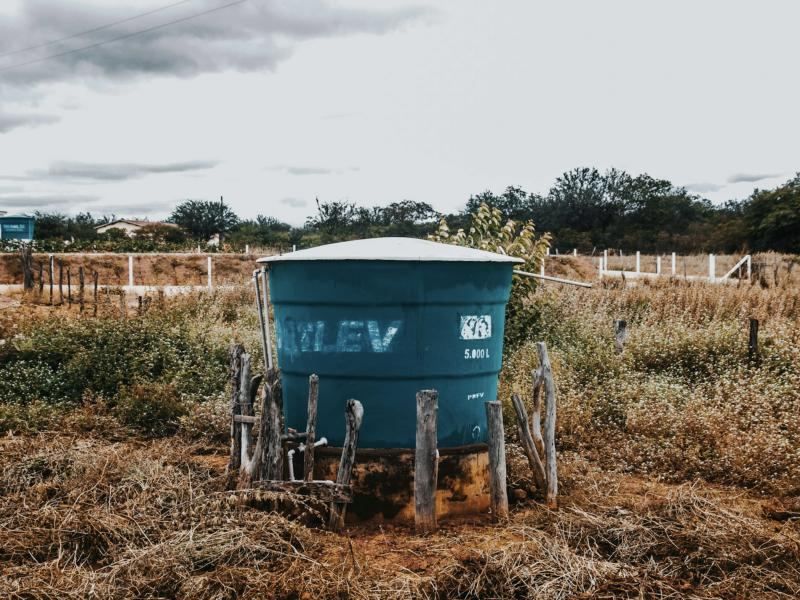
- Rain is scarce and comes in bursts. A rainwater tank still helps, but plan on it being a top-up, not your supply. The big storms that do come can be violent, so check whether the plot is in a flood zone or near a rambla (a dry riverbed).
- Deliveries may be part of life. Find out who delivers in the area and what they charge before you buy. My guide to water deliveries and tanks covers sizing.
Water rights tied to irrigation communities can add real value to a plot. If the seller mentions a share in a local comunidad de regantes, ask to see the paperwork and what it costs each year.
Waste
A country house needs its own wastewater system, and near the Mar Menor, discharges are under particular scrutiny because of the lagoon’s well-known problems. A sealed tank or a treatment plant may be the safer choice. My guide to septic tank rules explains when you need a discharge permit.
What I’d check before buying in Murcia
- Water first. Registered borehole, irrigation share, deliveries, or nothing?
- Flood risk. Ramblas look harmless for eleven months of the year.
- The land category and every building’s licence. Get a written planning report from the town hall.
- Whether the farmhouse route is realistic for you. Building new usually depends on a genuine farm.
- Heat. Which way does the house face, how thick are the walls, and where will the batteries live?
What it costs to set up here
Here’s a rough set-up budget for an off-grid house in Murcia, assuming a €150,000 resale purchase. The system prices are national figures I’ve checked, so get local quotes before you rely on them.
| Item | Typical cost |
|---|---|
| Purchase tax (7.75% on €150,000) | €11,625 |
| Off-grid solar kit, 9.6 kWh lithium, 5 kW inverter (equipment only) | €3,600–€3,700 |
| Installing and legalising the solar system | Legalisation from about €600; installation on top |
| Rainwater tank, installed | €1,500–€7,000 |
| Borehole, if you need one | €1,800–€15,000 |
| Septic tank (tank only) | €900–€5,000, plus fitting from €1,500 and licences of €500–€2,000 |
| Or a small treatment plant, installed | €2,000–€4,000 |
| Starlink internet | From €35 a month, plus a €10 monthly kit fee for new customers |
For a household using about 10 kWh a day, the winter figures above point to eight 550 W panels (around 4.2 kWp), so the kit in the table would need more panels added. In Murcia, water is the cost I would price first: a dry borehole or long-term deliveries change the whole budget. For running costs once you’ve moved in, see first-year costs of living off-grid.
Heating, cooling and the seasons
Murcia’s winters are short and mild by Spanish standards, though the high north-west around Caravaca and Moratalla is noticeably colder. Summer is the challenge: long, hot and dry, especially in the Guadalentín valley and around Murcia city.
That makes the building and the battery the key decisions. Shade, thick walls and good night ventilation reduce how much cooling you need. Run the air-con in the afternoon while the panels are producing, and keep the batteries out of direct sun. Murcia’s excellent winter sun means heating rarely strains the system; a small wood stove covers the cold snaps.
Internet
Coverage in rural Murcia varies from valley to valley. Check the 4G coverage map, then test your phone at the property at different times of day. Where 4G is weak, Starlink works almost anywhere with a clear view of the sky. Remember that routers and dishes run all night, so include them in your power budget. My internet guide compares the options.
Buying in Murcia, step by step
- Get the cadastral reference and look at the Catastro record. My guide shows four ways to find it.
- Order a nota simple from the Land Registry and compare it with the Catastro and with what’s actually there.
- Start with water: registration with the Segura authority, irrigation shares, or delivery costs.
- Check flood risk from ramblas on the plot and the access track.
- Get a written planning report on the land category and every building’s licence.
- If you plan to build, check whether the farmhouse route is realistic for you.
- Pay an architect for a site visit before the deposit contract, and get a written opinion.
- Have a lawyer write conditions into the deposit contract so you can walk away if the checks fail.
- Sign at the notary, pay the purchase tax, and register the property in your name.
The general checks are covered in checks before buying rural land, and if the property is half fallen down, read buying a ruin step by step as well.
Who to talk to
You’ll deal with the same handful of offices wherever you buy, but it helps to know who does what:
- The town hall’s planning department (urbanismo): the land category, licences, and a written planning report on the plot.
- The Land Registry (Registro de la Propiedad): the nota simple, which shows owners, debts and charges.
- The Catastro: the official description of the land and buildings for tax.
- The water authority, here the Confederación Hidrográfica del Segura: boreholes, wells and discharges.
- The regional industry department, here the Región de Murcia’s industry department: registering the solar installation’s electrical certificate, usually done by your installer.
- A notary: signs the deed. Notaries check identities and paperwork, not the property itself.
A local architect and a property lawyer will deal with most of these for you, which is the main reason to hire them early.
Mistakes I’d avoid here
- Buying before sorting out water.
- Ignoring a rambla across the track or the plot.
- Assuming you can build a house on farmland without running a genuine farm.
- Leaving batteries in a hot shed through a Murcian summer.
Quick facts
| Planning law | LOTURM (Ley 13/2015), amended in 2026 |
| House tied to a farm | Farm of at least 20,000 m² (10,000 m² irrigated “unsuitable” land) |
| Purchase tax (resale) | 7.75% flat |
| Winter solar, per kW of panels | About 3.0 kWh a day |
| Water authority | Confederación Hidrográfica del Segura |
The directory lists solar installers, borehole drillers and water tank firms in Murcia.
Questions people ask me
Is Murcia cheaper to buy in than Alicante?
On tax, yes: 7.75% against 9% in the Valencian Community. Property prices are another matter and change by area, so compare like with like.
Can I live on rainwater in Murcia?
Not on its own, in my view. It’s a valuable top-up, but you need another source for the dry months.
Will my solar panels get dusty?
Very. Long dry spells and occasional dust from North Africa leave a film that cuts output. Ground-mounted panels are easier to clean.
Do I need a generator?
With Murcia’s winter sun, many households manage without. It depends on your loads and how much risk you’ll accept; my generator guide sets out the trade-off.
Is it worth buying land with irrigation rights?
Often, yes, because water is scarce. Ask for the paperwork, what the annual fees are, and how reliable the supply has been in dry years.
Does Murcia get flash floods?
Yes. Heavy autumn storms can turn dry ramblas into torrents. Check where water runs on the plot and whether the track crosses a rambla.
Do I need air-conditioning?
Most people want it in high summer. With Murcia’s sun, it’s very achievable off-grid if the battery is sized for evening use.
Is the Mar Menor area a good place to go off-grid?
It has great sun, but discharges there are under particular scrutiny because of the lagoon’s problems. A sealed tank or treatment plant may be the safer wastewater choice, so price that in.
What about the high north-west of the region?
Around Caravaca and Moratalla it’s greener, higher and colder in winter, with more chance of water. Size the heating and solar for colder nights than on the plains.
How big a water tank do I need?
It depends on your sources and how often deliveries come. My guide to water deliveries and storage tanks shows how to work it out.
The short version
Murcia has superb sun, a lower purchase tax than its neighbours and a lot of empty country. Building new usually needs a genuine farm, and water is the constraint that decides whether a finca works. Sort out the water before anything else.
Leave a Reply