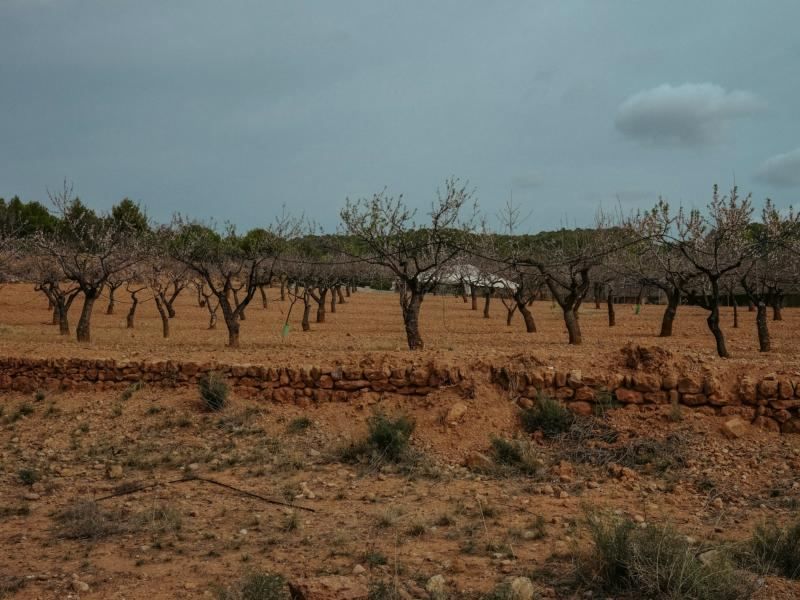
In my piece on buying a farm in Spain, I borrowed a phrase from a forum that’s stuck with me: desert bingo. You can buy 100 hectares for the price of a second-hand hatchback. Whether you can do anything with it is a different game entirely.
When we were looking for our finca, I built a checklist. Some of it came from expensive mistakes other people told me about, some from the near-miss I describe in what you can build on rustic land. This is that checklist, tidied up, with what each check costs and where to get the answer.
It’s written for people buying rural land to live on, with or without a house already on it. If there’s a ruin involved, read buying a ruin step by step as well. And remember: I’m sharing what I learned, not legal advice. A local lawyer and architect are still essential.
1. What the land is for: the planning category
This is the first check, and the one that decides everything else.
Rural land in Spain is mostly rustic land (*suelo rústico* or *suelo no urbanizable*), and it comes in categories. Ordinary rustic land may allow limited building under strict conditions. Protected rustic land, whether for landscape, ecology, archaeology, flood risk or forest, often allows nothing new at all.
The Catastro will describe a plot as “rústico”, but that’s a tax label. It doesn’t tell you the planning category. For that you need the town’s plan, ideally confirmed in writing by the town hall. Depending on the town, the document might be called a *cédula urbanística*, an urban planning report or a certificate of planning compatibility. A *cédula urbanística* is an information document issued by the council’s planning department that sets out the current planning situation of a property or plot.
When you ask, be specific: is a house allowed here? Under what conditions? What about a pool, a barn, a borehole?
2. Who owns it, and what’s attached: the Registry
The Land Registry tells you who legally owns the land and what burdens it carries: mortgages, seizures, easements, rights of way.
Order a nota simple. Through the Registrars’ website it costs €9.02 plus VAT per property. Check:
- The owner matches the seller (all of them, if it’s inherited).
- The size and boundaries.
- Any mortgages, seizures or other charges.
- Any easements, rights of way or water rights.
- Whether any building on the land is registered.
Get a fresh one just before you sign anything, and again just before completion.
3. What’s actually there: Catastro and the ground
The Catastro is the tax register. It has its own map and its own areas, and they often don’t match the Registry or reality. A finca of “2 hectares” in the Registry might be 1.6 in the Catastro and 1.8 on the ground.
Walk the boundaries with the seller. Compare what you see with both maps. If there are big differences, your lawyer and a surveyor can sort them out before the sale, not after. My guide to finding a property’s cadastral reference shows how to get the Catastro record.
4. Can you get there? Access and rights of way
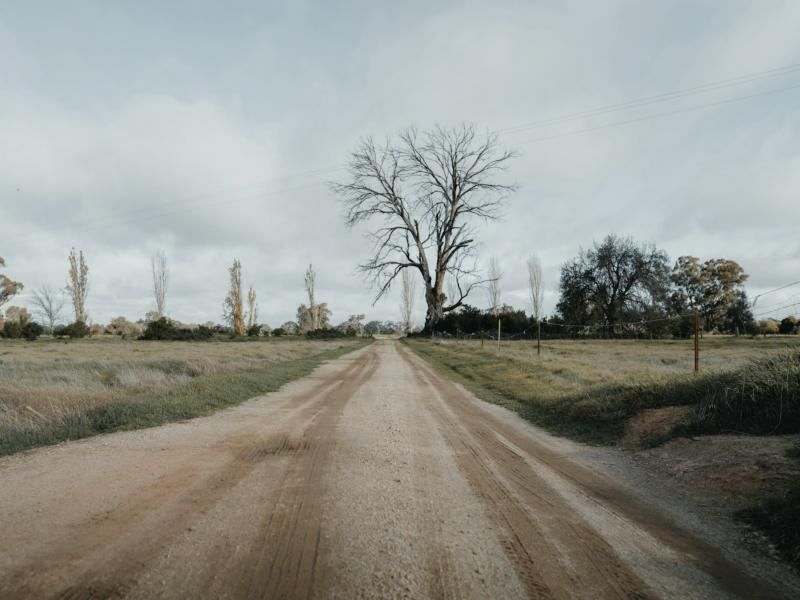
Rural land is often reached by tracks that cross other people’s land. A track the seller has used for thirty years isn’t necessarily a legal right of way.
Check:
- Is the access a public road, a public track, or a private track with a registered right of way?
- Who maintains it, and who pays?
- Can a delivery lorry, a water tanker and a septic truck get down it, in the wet as well as the dry?
I learned about access the hard way. Nobody mentioned the driveway when I dreamed of living off-grid, and the day the van didn’t stop is another lesson in why it matters.
5. Water: rights, wells and reality
Water decides whether land is liveable. Check:
- Is there a registered well or borehole? Ask for the basin authority’s resolution or Water Register entry. In the Júcar basin, a new owner must apply again to register the well in their name.
- Could you drill one? Basin authorities require minimum distances from existing wells, typically 100 metres in the Júcar basin. Ask the neighbours where theirs are.
- Are there irrigation rights? Shares in an irrigation community can be valuable, but irrigation water usually isn’t drinking water.
- How would you manage without? Deliveries and rainwater tanks are a fallback. See water deliveries and tanks.
My borehole permits guide covers the 7,000 m³ rule and what drilling costs.
6. Flood, fire and other hazards
Hazards can make land unbuildable, uninsurable or simply unsafe.
- Flood: check whether the land is in a flood zone or near a watercourse, even a dry *rambla*. Spain’s national flood zone mapping system and the regional planning viewers show this. Building near watercourses needs the basin authority’s say.
- Forest fire: in the Valencian Community, the zone of forest influence extends 500 metres from forest land, and the Generalitat has an online tool to check a plot against it. Extra rules apply to burning and works there. Ask how close the nearest pine forest is, and what the fire break around the house would need to be.
- Slopes and rock: steep or rocky land costs more for every trench, foundation and septic system.
7. Protected areas and public land
- Natural areas: if the land is in a natural park or a Natura 2000 site, building and even some farming may be restricted.
- Livestock routes: ancient drove roads (*vías pecuarias*) are public land, and some run right through private plots.
- Roads: state and regional roads have protection zones where you can’t build.
- Coast: near the sea, the coastal law adds its own strict zones.
Your town hall’s planning report should flag these, but ask about each one by name.
8. The neighbours’ right to buy
On small rustic plots, neighbours can have a legal right to buy the land in your place, at the same price and on the same terms. The Civil Code applies it to rustic plots of no more than one hectare that aren’t separated from the neighbour’s by a ditch, stream, ravine, track or similar. The window to use it is short, but it exists. My ruin guide explains more. Ask your lawyer about it early if your dream plot is small.
9. Taxes and running costs
- Purchase tax: resale land and houses pay the regional transfer tax (ITP). The general rates are 9% in the Valencian Community from June 2026, 7% in Andalucía, 7.75% in Murcia and 9% in Castilla-La Mancha. My ruin guide has the sources.
- IBI: the annual property tax. For rustic property, councils set the rate between 0.3% and 0.9% of the cadastral value. Ask the seller for the last receipts, which also tell you the cadastral value.
- Unpaid debts: unpaid IBI can follow the property, so make sure it’s paid up before completion.
My guide to first-year costs covers the running costs once you’re in.
10. Finance
If you’ll need a mortgage, ask early. Banks are more cautious with rustic land than with houses. One mortgage broker says banks finance between 50% and 80% of the value of the land when it’s part of a self-build mortgage, and stresses that the nota simple alone isn’t enough: you have to check the planning status with the council.
11. The things maps don’t show
Spend time there, at different times of day and in different weather, before you commit.
- Noise: a quarry, a motorway, a pig farm, a nightclub on the next hill, a hunting estate in season.
- Smells: farms, treatment plants, landfill.
- Light: how many hours of winter sun does the house site get? A hill to the south can wipe out your solar in December. My solar guide explains why winter sun matters so much.
- Mobile and internet: test on site. See staying connected.
- The neighbours: introduce yourself. Ask about water, access, the track in winter, and anything they think you should know. They’ll tell you more in ten minutes than an agent will in a week.
- The soil: if you want to grow food, look at what grows nearby, and dig a hole.
12. Questions to ask the seller
Sellers know things no map shows. Ask them, politely and directly, and write down the answers:
- Why are you selling?
- Where does the water come from, and has it ever run out?
- Is the well or borehole registered? Do you have the paperwork and the meter readings?
- What’s the septic system, and when was it last emptied?
- Who owns and maintains the access track? Have there been any disputes?
- Have there been any floods, fires or landslips?
- Has anyone from the town hall or the basin authority ever visited about the property?
- What’s the IBI, and are there any debts on the property?
- What does the house use for heat, and how much wood or gas a winter?
- What internet and phone service do you use, and does it work in storms?
If the answers are vague, ask for documents. If there are no documents, factor that into the price.
A note on farming the land
If you’re buying land to farm it, even on a small scale, there’s another layer. Selling produce, keeping animals or running a smallholding can bring its own registrations and rules. I learned that when a vegetable box scheme I set up on my father-in-law’s plot brought a phone call from the regional agriculture department, as I described in buying a farm in Spain. Ask about the rules before you start selling, not after.
The checklist
| Check | Where to get the answer | Done? |
|---|---|---|
| Planning category and what’s allowed | Town hall planning report | |
| Ownership, charges, easements | Nota simple from the Land Registry | |
| Boundaries and area | Catastro map, Registry, walking the land | |
| Legal access | Registry, town hall, lawyer | |
| Water rights or well registration | Seller, basin authority | |
| Flood and fire zones | Regional and national map viewers | |
| Protected areas, livestock routes, roads | Town hall, regional viewers | |
| Neighbours’ right to buy | Lawyer | |
| IBI paid and cadastral value | Seller’s receipts | |
| Finance | Bank or broker | |
| Winter sun, noise, coverage | Visits at different times |
When to walk away
Most problems have a price. A few don’t. I’d walk away if:
- The town hall says a house isn’t allowed and you want to live there.
- There’s no legal access and the neighbour won’t grant one.
- The land is in a flood zone and the house site is in the water’s path.
- The owners can’t all be found or won’t all sign.
- The seller won’t let you check things before you pay a deposit.
Walking away from a lovely plot hurts. Buying the wrong one hurts for longer.
Questions people ask me
Can I buy rural land and put a caravan on it?
Living permanently in a caravan on rustic land is generally treated like any other dwelling. Ask the town hall before you buy.
Is cheap land ever a good deal?
Yes, if you’re buying it for what it is (an olive grove, a weekend picnic spot, a vegetable plot) rather than what you hope it might become. It’s when you’re paying for a house that the land can’t legally have that cheap land becomes expensive.
Do I need a lawyer for a land purchase?
I wouldn’t buy without one. Make sure they’re independent of the seller and the agent.
What should I do first?
Ask the town hall what’s allowed on the plot. It costs little and saves the most.
The bottom line
Buying rural land in Spain is perfectly doable, and for us it’s been the best decision we’ve made. But the paperwork matters more than the view. Get the planning category in writing, read the Registry, walk the boundaries, find the water, check the hazards, and spend time there. Do all that, and you’re not playing desert bingo. You’re buying a home.

Leave a Reply