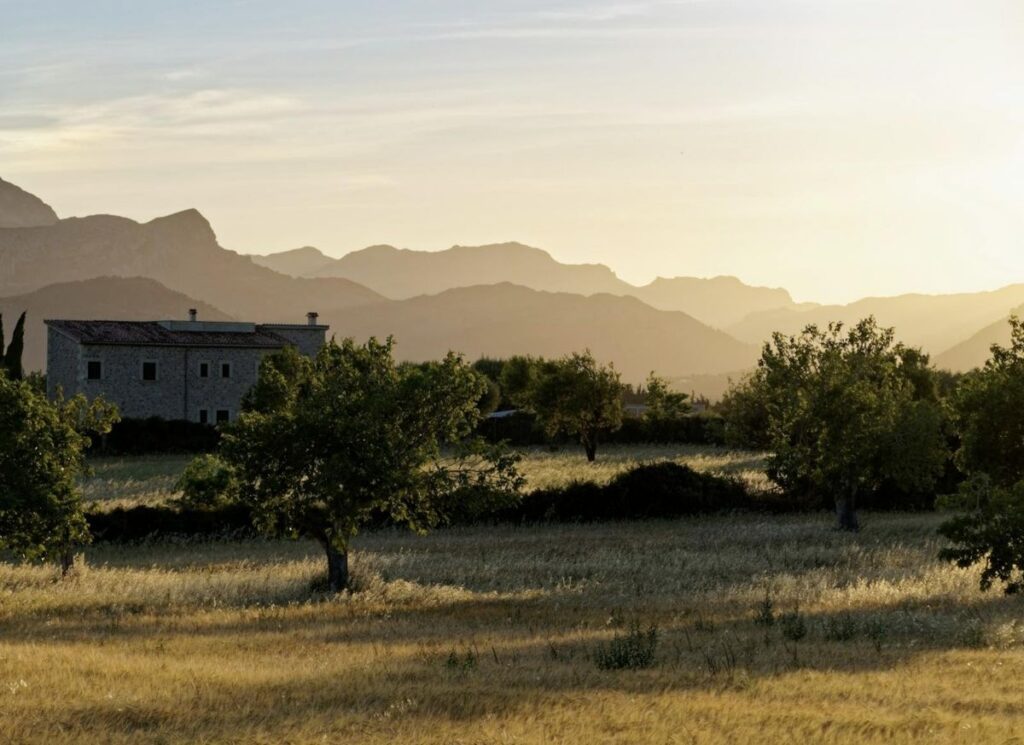
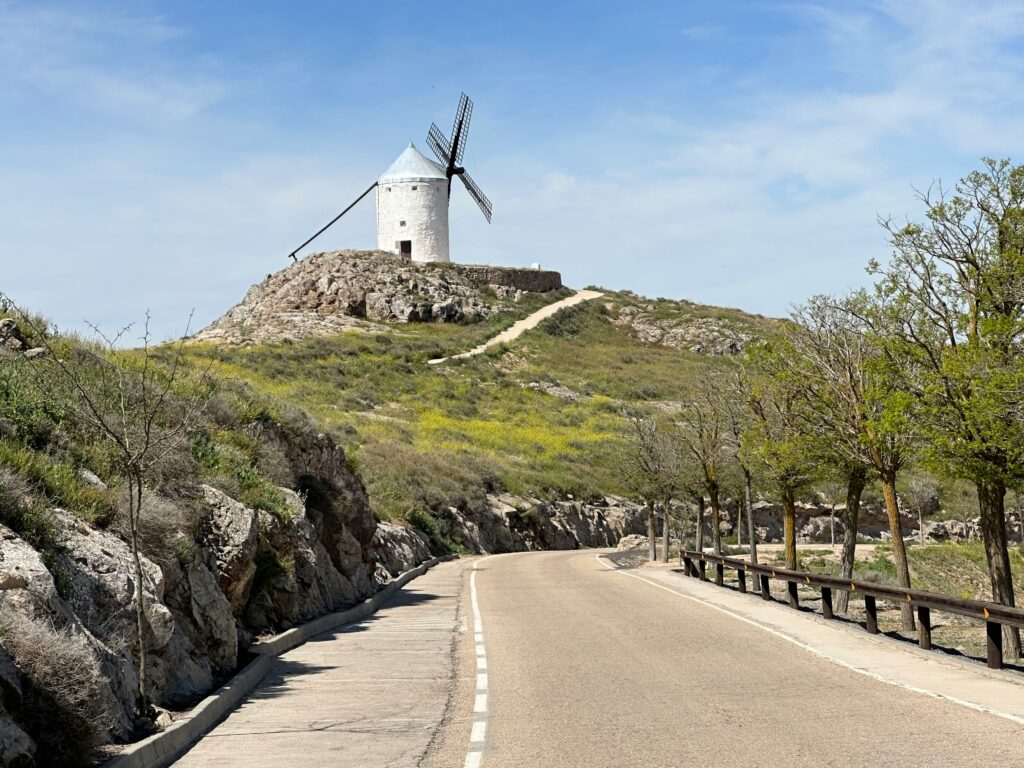
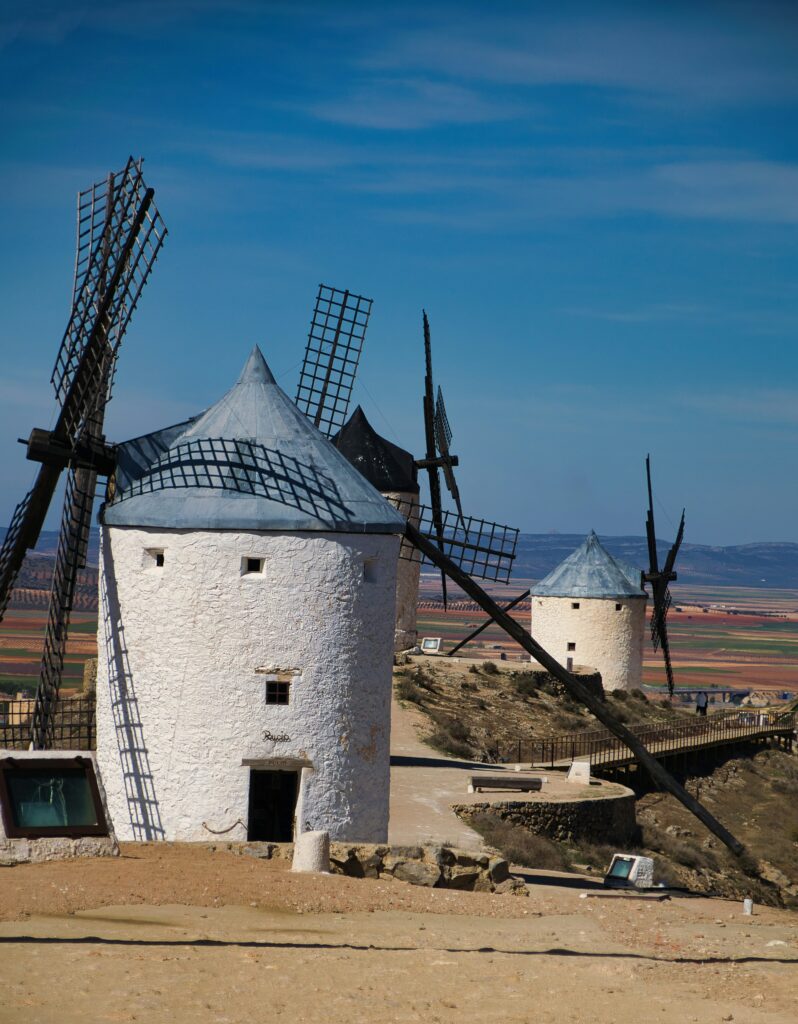
Castilla-La Mancha is the great high plateau in the middle of Spain: vineyards, wheat, windmills, hilltop villages and a great deal of thinly populated country. It’s inland from where I live, and it’s where a lot of people end up when they find that coastal land is too expensive or too regulated.
This guide covers the land rules, the purchase tax, the sun on the plateau, and water. It’s research rather than experience, and every figure is linked to its source.
I’m not a lawyer. Rules change and town halls read them differently. Use this as a map, then get a local lawyer and architect to check the actual property.
The land rules in Castilla-La Mancha
Castilla-La Mancha’s planning law is the consolidated planning and land act (TRLOTAU), which has been amended several times, including by Ley 1/2021, plus a separate regulation on rustic land. Rustic land is split into categories, and the one that matters most to house-hunters is suelo rústico de reserva: ordinary rustic land without special protection.
A family house on rustic land
Castilla-La Mancha is one of the regions that expressly allows a detached family house in the countryside. A University of Seville study of regional laws notes that it provides for the “vivienda familiar aislada” in rustic reserve land.
The regulation defines it strictly: one house on a single plot with its own access, with no grouping of houses on the same plot. The minimum plot and other conditions come from the regional rules and the town’s plan, and a technical planning instruction on rustic land lets towns set a bigger minimum plot, with justification. So ask the town hall for the exact figure for your parcel.
New this year: rustic land for village housing
A new law, Ley 7/2026 of 23 October, takes effect on 18 November 2026. Among other things, it makes it easier to reclassify rustic land as developable through special plans in towns with a proven housing need in sparsely populated areas or areas at risk of depopulation.
That’s aimed at village housing, not at individual fincas. But if you’re buying land on the edge of a small village, it’s worth asking the town hall whether a plan like that is coming, because it could change what happens next door.
Existing houses
As everywhere, check every building against what’s licensed and registered, and don’t assume age fixes everything. My guide to legalising a rustic house explains the general idea and the checks to make.
Purchase tax and buying costs
Castilla-La Mancha charges 9% transfer tax on resale property, with a reduced 3% for some young buyers and 5% for large families. That’s €18,000 on a €200,000 house, the same as the Valencian Community’s general rate.
Sun and power
The plateau is sunny but cold in winter, and altitude makes nights sharp. Winter output per kilowatt of panels is lower than on the coast:
| Place | Winter output per kW of panels | Summer output per kW |
|---|---|---|
| Talavera de la Reina (Toledo) | 2.75 kWh a day | 8.18 kWh a day |
| Sonseca (Toledo) | 2.75 kWh a day | n/a |
| Illescas (Toledo) | 2.45 kWh a day | 8.01 kWh a day |
Allowing 20% for losses, a household needing 10 kWh a day in winter would want about 4.5–5.1 kWp of panels on these figures: nine or ten 550 W panels. The analysis for Talavera also notes occasional hail, strong winds and brief snow, so ask about mounting and panel ratings.
Winter heating is the big load here, not air-con. Heat with wood or pellets rather than electricity unless you’re building a much bigger system. My guide to heating an off-grid home covers the options, and do you need a generator? is worth reading before your first winter.
Water
Castilla-La Mancha sits across several river basins. The Tajo covers much of the north and west, the Guadiana the south-west, the Júcar the east including much of Albacete and Cuenca, and the Segura the far south-east of Albacete. Which one you deal with for a borehole depends on the plot.
In some areas groundwater is under pressure and new boreholes are tightly controlled. Don’t assume you’ll get permission; read my guide to borehole permits and ask the right Confederación before you buy. Have a plan B in deliveries and tanks.
Waste
You’ll need your own system: a sealed tank, a septic tank with a discharge permit or a small treatment plant. See my guide to septic tank rules.
What I’d check before buying in Castilla-La Mancha
- The land category. Rustic reserve land is where a family house may be possible.
- The minimum plot for a house in that town. Get it in writing.
- Water rights, especially for a new borehole.
- Winter. How will you heat the house, and how cold does the site get?
- Every building’s licence.
- Distance to services and internet coverage. See the coverage map.
What it costs to set up here
Here’s a rough set-up budget for an off-grid house in Castilla-La Mancha, assuming a €150,000 resale purchase. The system prices are national figures I’ve checked, so get local quotes before you rely on them.
| Item | Typical cost |
|---|---|
| Purchase tax (9% on €150,000) | €13,500 |
| Off-grid solar kit, 9.6 kWh lithium, 5 kW inverter (equipment only) | €3,600–€3,700 |
| Installing and legalising the solar system | Legalisation from about €600; installation on top |
| Rainwater tank, installed | €1,500–€7,000 |
| Borehole, if you need one | €1,800–€15,000 |
| Septic tank (tank only) | €900–€5,000, plus fitting from €1,500 and licences of €500–€2,000 |
| Or a small treatment plant, installed | €2,000–€4,000 |
| Starlink internet | From €35 a month, plus a €10 monthly kit fee for new customers |
For a household using about 10 kWh a day, the winter figures above point to nine to ten 550 W panels (around 4.5–5.1 kWp), so the kit in the table would need more panels added. Water rights can be the hardest part here, so confirm the borehole position before you buy. For running costs once you’ve moved in, see first-year costs of living off-grid.
Heating, cooling and the seasons
The plateau has a continental climate: hot, dry summers and cold winters, with frost common and nights that drop sharply. Heating is the biggest energy question, and doing it with electricity off-grid means a large system. A wood or pellet stove, with good insulation, is the usual answer.
Summer days are hot, but nights cool down, so night ventilation and thick walls keep a house comfortable without much air-con.
Internet
Coverage in rural Castilla-La Mancha varies from valley to valley. Check the 4G coverage map, then test your phone at the property at different times of day. Where 4G is weak, Starlink works almost anywhere with a clear view of the sky. Remember that routers and dishes run all night, so include them in your power budget. My internet guide compares the options.
Buying in Castilla-La Mancha, step by step
- Get the cadastral reference and look at the Catastro record. My guide shows four ways to find it.
- Order a nota simple from the Land Registry and compare it with the Catastro and with what’s actually there.
- Check the land category: rustic reserve land is where a family house may be possible.
- Get the minimum plot size for a house in that town, in writing.
- Check water rights, especially for a new borehole.
- Ask whether any special plan under the new Ley 7/2026 affects land nearby.
- Pay an architect for a site visit before the deposit contract, and get a written opinion.
- Have a lawyer write conditions into the deposit contract so you can walk away if the checks fail.
- Sign at the notary, pay the purchase tax, and register the property in your name.
The general checks are covered in checks before buying rural land, and if the property is half fallen down, read buying a ruin step by step as well.
Who to talk to
You’ll deal with the same handful of offices wherever you buy, but it helps to know who does what:
- The town hall’s planning department (urbanismo): the land category, licences, and a written planning report on the plot.
- The Land Registry (Registro de la Propiedad): the nota simple, which shows owners, debts and charges.
- The Catastro: the official description of the land and buildings for tax.
- The water authority, here the Tajo, Guadiana, Júcar or Segura basin authority: boreholes, wells and discharges.
- The regional industry department, here the Junta de Comunidades’ industry department: registering the solar installation’s electrical certificate, usually done by your installer.
- A notary: signs the deed. Notaries check identities and paperwork, not the property itself.
A local architect and a property lawyer will deal with most of these for you, which is the main reason to hire them early.
Mistakes I’d avoid here
- Buying land that isn’t rustic reserve land and expecting to build a house.
- Assuming a new borehole will be approved.
- Underestimating winter heating on the plateau.
- Not asking the town hall about plans nearby under the new law.
Quick facts
| Planning law | TRLOTAU and the rustic land regulation |
| Family house on rustic land | Allowed in rustic reserve land; one house per plot, minimum plot set by the rules and the town |
| New law | Ley 7/2026, in force 18 November 2026 |
| Purchase tax (resale) | 9% |
| Winter solar, per kW of panels | About 2.5–2.8 kWh a day |
| Water authorities | Tajo, Guadiana, Júcar, Segura |
The directory covers Albacete: see solar installers, borehole drillers and stove and heating firms.
Questions people ask me
Is it easier to build here than on the coast?
Often, yes. Castilla-La Mancha expressly allows a family house on ordinary rustic land, which the Valencian Community makes very hard. The plot still has to meet the minimum size and the town’s conditions.
How cold does it get?
Cold enough that heating is the main energy question. Plan for a wood or pellet stove and good insulation.
Is water a problem?
It can be. Check the water source and any borehole rights before you buy rather than after.
What does Ley 7/2026 change for buyers?
It mainly makes it easier for towns in sparsely populated areas to reclassify rustic land for village housing. It doesn’t change the rules for an individual finca, but it could affect land nearby.
How cold do winters get?
Cold enough that heating is the main energy question. Plan for a wood or pellet stove and good insulation.
Is Albacete covered by the supplier directory?
Yes. You’ll find solar installers, borehole drillers and heating firms in Albacete in the directory.
Is Cuenca or Guadalajara different from La Mancha proper?
Yes. The mountains of Cuenca and Guadalajara are wetter, greener and colder than the plains, with more forest and more fire risk. Size heating generously there.
Can I put a container house on rustic land here?
It’s treated like any other building, so the same plot and permission rules apply. See container houses on rustic land.
Do I need a generator?
On the plateau, cold cloudy spells in winter are when a generator earns its keep. My generator guide covers the options.
The short version
Castilla-La Mancha offers space, sun and a real legal route to a family house on ordinary rustic land, which is rarer than you might think. Get the minimum plot in writing, plan seriously for winter heating, and sort out water rights before you sign.
Leave a Reply