
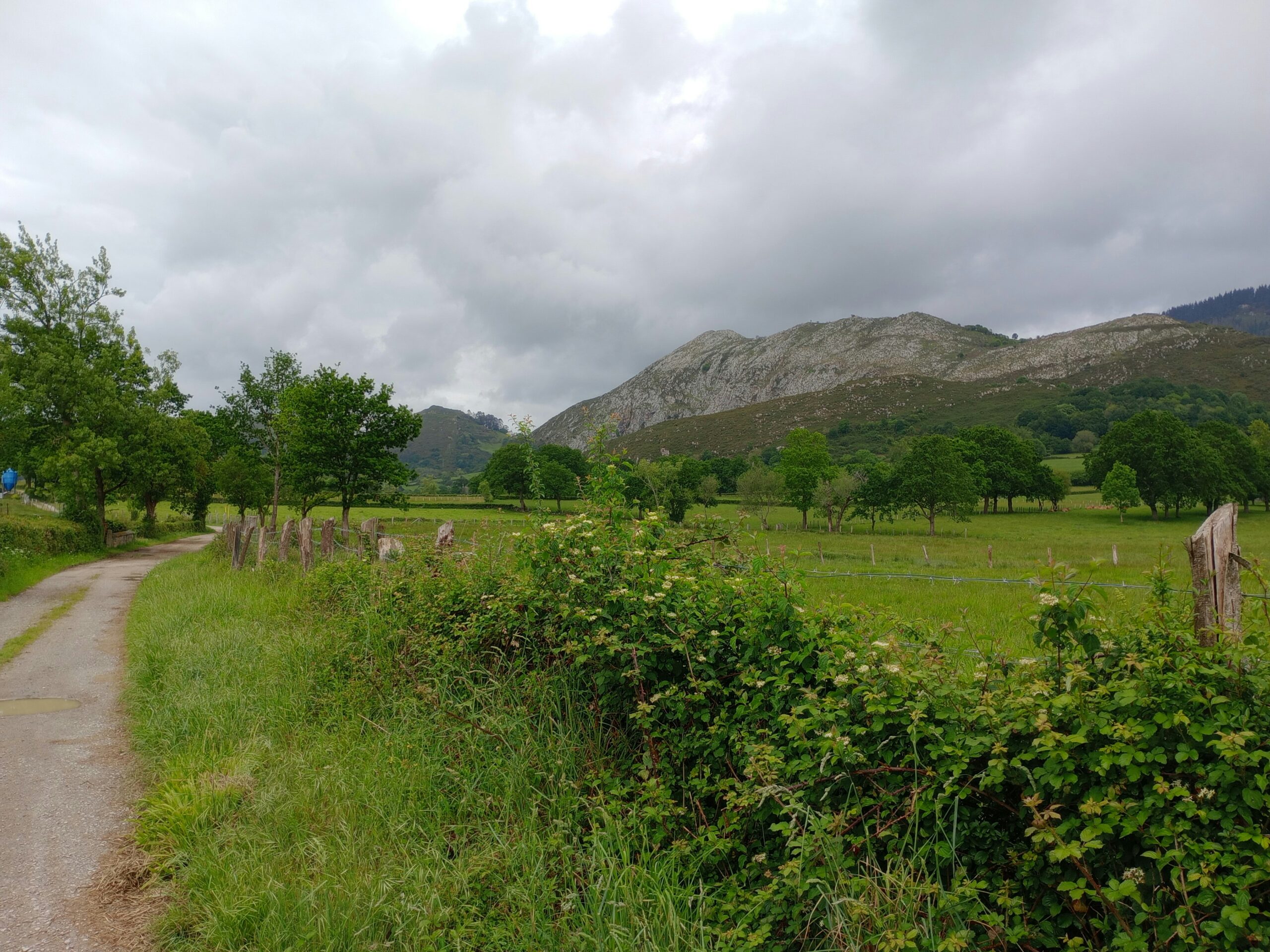
The joys of rural living in Spain, where the house might be perfect but getting to it is another matter entirely.
When people imagine living off-grid in Spain, they tend to picture olive trees, sunshine, a little house in the countryside and perhaps a glass of wine as the sun goes down.
They don’t generally picture themselves standing ankle-deep in mud, wondering whether a delivery driver is going to reverse half a kilometre down a track because he doesn’t fancy the look of the last bend.
But here we are.
Of all the things I thought about before embracing rural life, the driveway was somewhere near the bottom of the list. Actually, it probably wasn’t on the list at all.
Solar panels? Obviously. Water supply? Essential. Internet connection? Absolutely vital, unless you fancy spending your evenings talking to yourself.
Getting from the public road to the front door?
Apparently, I assumed that would just happen.
A Track Is Not Necessarily a Road
There is a particular sort of optimism that comes with viewing rural properties in Spain.
The estate agent drives you along a dusty track in a reasonably capable vehicle. It’s a beautiful day. The countryside looks magnificent. You arrive at the house without incident.
Everything seems perfectly straightforward.
What you haven’t considered is what happens when it rains, when a lorry needs access or when the track develops a hole large enough to accommodate a small family.
And they do develop holes.
Some appear gradually. Others seem to arrive overnight, presumably through some geological process that nobody has bothered to explain.
The first time you drive over one, you make a mental note to avoid it next time.
The second time, you realise it has got bigger.
By the third time, you’re considering whether the hole has acquired legal ownership of that particular section of Spain.
The Rain Problem
For much of the year, the tracks around rural Alicante are perfectly manageable.
Dusty, certainly. A bit rough. Occasionally decorated with stones that look suspiciously capable of puncturing a tyre.
But manageable.
Then it rains.
Not necessarily for very long, either. A sufficiently enthusiastic Mediterranean downpour can transform a perfectly respectable track into something resembling a dry riverbed that’s suddenly remembered its original purpose.
Water follows the easiest route downhill, which is frequently the route you were hoping to drive along.
Fine soil disappears. Gravel migrates. Ruts deepen.
The next morning, the track may look almost normal until you discover that one wheel is now travelling considerably lower than the other three.
This is when you begin taking an unhealthy interest in drainage.
Delivery Drivers Are Not Impressed
One of the less glamorous aspects of rural living is explaining your address.
The postcode covers an enormous area. The road may not have a name. Google Maps sometimes believes the house is accessible from a completely different direction.
And the delivery driver has already phoned twice.
You explain that he needs to turn left after the old almond tree, continue past the ruined building and ignore the track that looks more inviting because it goes absolutely nowhere.
There is a pause.
“¿Es camino de tierra?”
Yes, it’s a dirt track.
Another pause.
Then comes the inevitable suggestion that perhaps you could meet him at the main road.
Which rather defeats the purpose of home delivery.
To be fair, I don’t entirely blame them. If I were driving a large van full of other people’s parcels, I wouldn’t be enthusiastic about taking it down an unfamiliar track either.
The same problem applies when ordering building materials, water tanks or anything that requires a vehicle larger than a family car.
You can spend weeks choosing the perfect piece of equipment and only afterwards discover that getting it to the property is a project in itself.
Gravel: The Great Disappearing Act
Eventually, most rural property owners start thinking about improving the track.
Gravel seems an obvious solution.
It’s relatively straightforward, it looks appropriate in the countryside and it doesn’t require turning the entire landscape into a motorway.
Unfortunately, gravel has a habit of going on holiday.
You put it in one place. A few months later, a surprising amount of it is somewhere else.
Some washes downhill. Some gets pushed into the edges by passing vehicles. Some seems to vanish entirely.
On a slope, the problem can be particularly entertaining.
You may begin with a beautifully level surface and finish with a collection of exposed stones, loose material and a new appreciation for the engineering involved in Roman roads.
Of course, the answer isn’t necessarily more gravel.
Often the underlying problem is drainage, inadequate compaction or water travelling straight down the wheel tracks.
Adding another load of stone without dealing with those issues can become an expensive annual tradition.
The Bit Around the House
There is also a distinction between the long, rough track leading to a rural property and the actual driveway or entrance around the house.
The first might be perfectly acceptable as a compacted agricultural track.
The second is where you park, unload shopping, walk to the front door and attempt to avoid bringing half the surrounding countryside indoors.
Loose gravel is less charming when you’re dragging bins across it or trying to manoeuvre something heavy on small wheels.
Concrete is an option, although it isn’t always particularly attractive.
Paving can look good, provided it’s installed properly and the ground beneath it remains stable.
Another possibility for a prepared entrance or parking area is resin-bound driveways, which combine decorative aggregate with resin to create a continuous surface.
That doesn’t mean you can simply pour resin over a muddy track and expect miracles. The base still needs to be suitable for vehicles and the drainage needs sorting out first.
But for the area immediately around a house, where appearance and practicality both matter, it’s worth considering.
Personally, I’d settle for a surface that doesn’t attempt to accompany me into the kitchen every time I come home.
Who Actually Owns the Track?
This is where things can become rather more complicated.
In rural Spain, the track you use every day might cross land belonging to several different owners.
It might be a public rural road. It might be private. You might have a documented right of access across somebody else’s property.
Or you might discover that everyone has been using it for decades without anybody being particularly clear about the paperwork.
These distinctions matter when someone decides the road needs substantial work.
Who pays?
Who gives permission?
Can you widen it?
Can you install drainage?
Is the neighbour who has been driving over it for thirty years going to contribute?
Possibly.
But I wouldn’t order the machinery just yet.
Before making significant alterations, it’s worth checking the property documents and asking the relevant town hall what permissions might be required. As I’ve discovered, building regulations for rural properties in Spain can be complicated enough without accidentally starting a dispute over a dirt track.
The fact that a track has always been there doesn’t automatically mean you can do whatever you like to it.
The Machinery Problem
Let’s suppose you’ve decided to repair the track properly.
Excellent.
You find someone with a machine. You agree on a price. You arrange a day.
Then you discover the machine can’t get through the gate.
Or the access is too narrow.
Or the operator wants to know where the excavated material is supposed to go.
Or the job requires more aggregate than you imagined, and each delivery costs a small fortune because of the distance involved.
Suddenly, that little bit of driveway maintenance has become a civil engineering exercise.
It’s another entry in the increasingly long list of what it really costs to go off-grid. Nobody puts driveway reconstruction on the romantic brochure.
And this is before anybody finds a buried pipe.
There is always a buried pipe.
A Few Things Worth Checking Before Buying a Rural Property
If I were looking at another off-grid property, I’d pay rather more attention to the approach road. In fact, I’d add it to my list of things to consider before going off-grid in Spain, somewhere between water supply and whether the nearest neighbour owns seventeen barking dogs.
Not just whether I could drive along it on a sunny afternoon, but whether it would still be usable after heavy rain.
I’d want to know who owned it, who maintained it and whether there were any established arrangements for sharing repair costs.
I’d also look at the steepest sections, the bends, the drainage and whether a delivery vehicle could actually reach the property.
A beautiful house at the end of a terrible track might still be worth buying.
But at least you’d know what you were getting into.
And if the estate agent says the road is absolutely fine, I’d be tempted to come back after a proper downpour.
Preferably in somebody else’s car.
Would I Swap It for a Tarmac Road?
Despite everything, probably not.
There’s something rather satisfying about leaving the main road behind and heading out into the countryside.
The absence of traffic, the peace and the feeling of being slightly removed from the rest of the world are all part of the attraction.
A rough track is a small price to pay for that.
Well, sometimes a surprisingly large price, depending on how much aggregate you’ve ordered this month.
But that’s rural life.
You fix one thing, discover another problem and gradually acquire a collection of tools you never imagined needing.
And if you’re lucky, one day you’ll have a driveway that survives the rain, doesn’t eat tyres and doesn’t cause delivery drivers to question their career choices.
I’m not asking for much.
Just a road that stays where I put it.