
Let me take a wild guess.
You saw those too-good-to-be-true land prices in Spain…and went down some real estate rabbit hole and ended up here. Right?
You’ve seen a chunk of olive grove or farmland for less than the cost of a second-hand estate car that’s already lived a full life. You’re already picturing it: self-sufficiency, homegrown tomatoes, the sun hitting just right, and not a nosy neighbor in sight.
Dream life. What’s stopping you?
Ah, right. Reality.
You dug a little deeper, maybe scrolled through some forums, and—bam—like a ball from the boot of Ronaldo at 30 yards out, the cold truth landed. Legally, you can’t just slap a house down on terreno rústico.
Unless—and this is a big unless—your plot already has a house on it, or you navigate the Spanish bureaucracy that’s more like deciphering tarot cards. That cheap land? It’s cheap because the rules make actually living on it a nightmare.
But hey, maybe there’s a loophole?
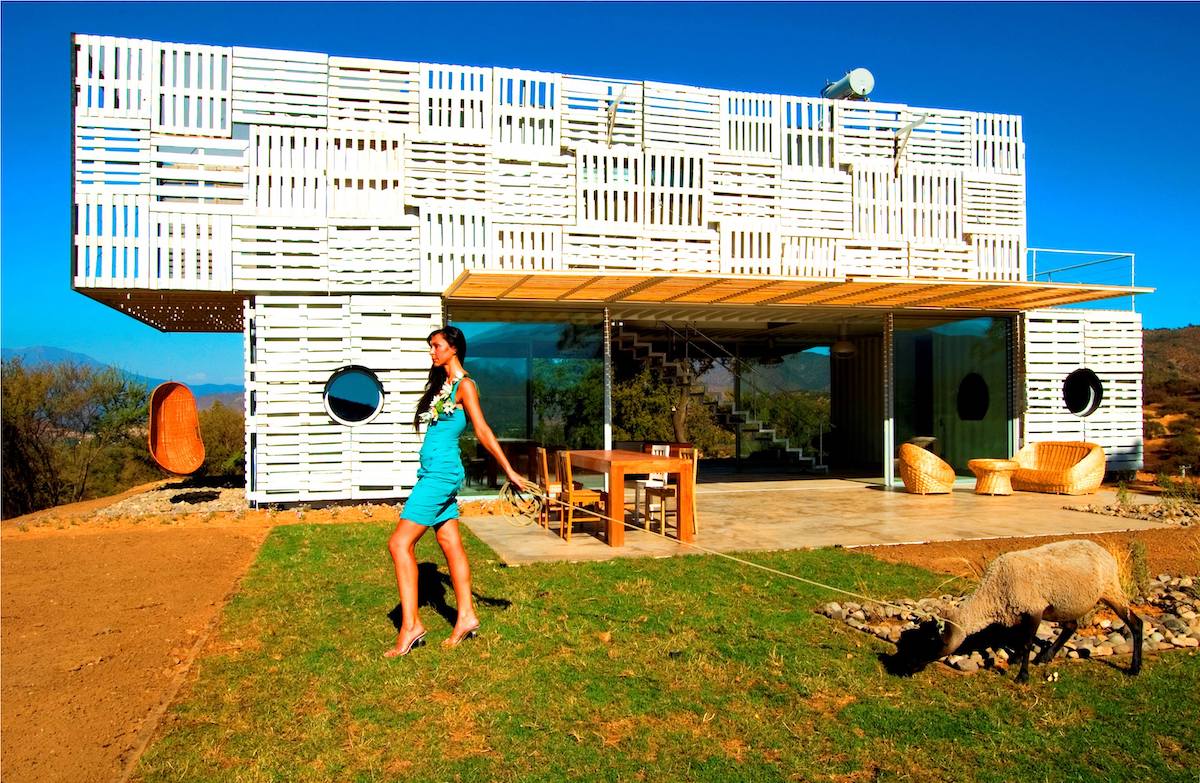
You’ve heard about container homes. What if you just… drop one there? Would that work?
Short answer: No.
Longer answer: Maybe. Let’s get into it. It’s something I am genuinely interested in and, with the help of the Spanish I’ve learned over the past 6 years here, I wanted to look into it for us.
A Quick Recap of Spanish Land Laws
Spain classifies land into three main types:
- Suelo urbanizable – This is land meant for development. With the right permits, you can build here without much drama.
- Suelo rústico – Rural land. Think farms, countryside, open space. Heavily restricted when it comes to construction.
- Suelo rústico protegido – Even stricter. Protected land where even thinking about building might get you a fine.
Not sure what kind of land you’re eyeing? Check Spain’s cadastral register, the Catastro—which is actually pretty good. Within minutes you can check the dimensions and categorisation of any plot of land in Spain.
Since suelo rústico is dirt cheap, it’s catnip for off-grid dreamers. But here’s the thing—it’s not impossible to build, just wildly complicated.
You might have a shot if:
- There’s already a house on the land. Renovate, restore, but don’t try to expand it.
- Your plot is big enough. Depends on the region—minimum 10,000m², but in Andalusia? You might need 25,000m². Protected areas? Forget it—50,000m² or more.
- The density rules work in your favor. Usually, that means you can only build on 2-5% of the land.
- There’s actual legal access—so, real roads, not just a dirt track your 4×4 can handle.
- You can prove the house is self-sufficient. No city water, no grid electricity, no traditional sewage.
- You pass an environmental impact study. (Good luck.)
Now, back to the real question.
What About a Container House?
This is where things get… interesting. Spanish land law draws a hard line between inmuebles (immovable structures, like houses) and muebles (movable stuff, like a caravan). If your container home is fixed in place—foundation, plumbing, electricity—guess what? It’s a house, legally speaking. And all the same restrictions apply.
But if it’s not permanently fixed? A mobile home on wheels? Then you’ve entered a legal grey zone. According to Idealista, Spain’s biggest property portal:
“A mobile prefabricated house with wheels and no permanent anchoring does not require construction permits. If it is simply placed on rustic land without altering the terrain, it is not considered an illegal construction. However, if any form of installation is built for the house, such as a concrete platform, this becomes a criminal offense.”
Translation: If you pour a foundation, they can come after you.
If you just park it there? Maybe you’ll be fine.
A Case in Point
In 2012, a guy in Gijón got slapped with a suspended jail sentence for putting a prefab house on suelo rústico. Not for the house itself. Nope. The crime? Pouring a concrete platform next to the door to use as an entrance.
How Likely Is It That You’ll Get Caught?
Officially? If you ask your local town hall, they’ll probably shut you down before you finish your sentence. Why? Because Article 319 of the Spanish Penal Code states:
“A prison sentence of one to three years and a fine of 12 to 24 months will be imposed on promoters, builders, or directors of unauthorized construction on rustic land.”
And guess what? No architect or builder wants to risk their neck for your off-grid dream.
Unofficially? Different story.
I came close to buying a plot of terreno rústico which already had a legal house on it, and also came with two container homes. The homes had been sitting on rustic land for years—they had electrics, clearly lived in, even two AC units. They were right by the main road into town.
Guess what? They’d been there 5 years and not a word from the town hall.
And what about the lawyer I once rented from? He had three shipping containers on his land, partially buried in concrete bottles for insulation. Not a single fine. Not a single problem.
Is A Container Home Worth the Risk? You Decide
Look, if you roll the dice and drop a container home on suelo rústico, here’s what you’re risking:
- A potential 12-24 month jail sentence (though first-time offenders with sentences under two years usually don’t serve time).
- Fines. Could be steep, could be minor. Hard to say.
- Being forced to move your home, which—let’s be real—would be a nightmare.
If that’s a gamble you’re comfortable with, then by all means, go for it.
Me? I’d be fine using a container for storage, a guest room, maybe even a pool house. But my full-time home? I wouldn’t want to wake up one morning to a knock on the door and an order to move off my own land.
Anyway, hopefully, this clears things up. Or, you know, makes your decision just a little harder.