
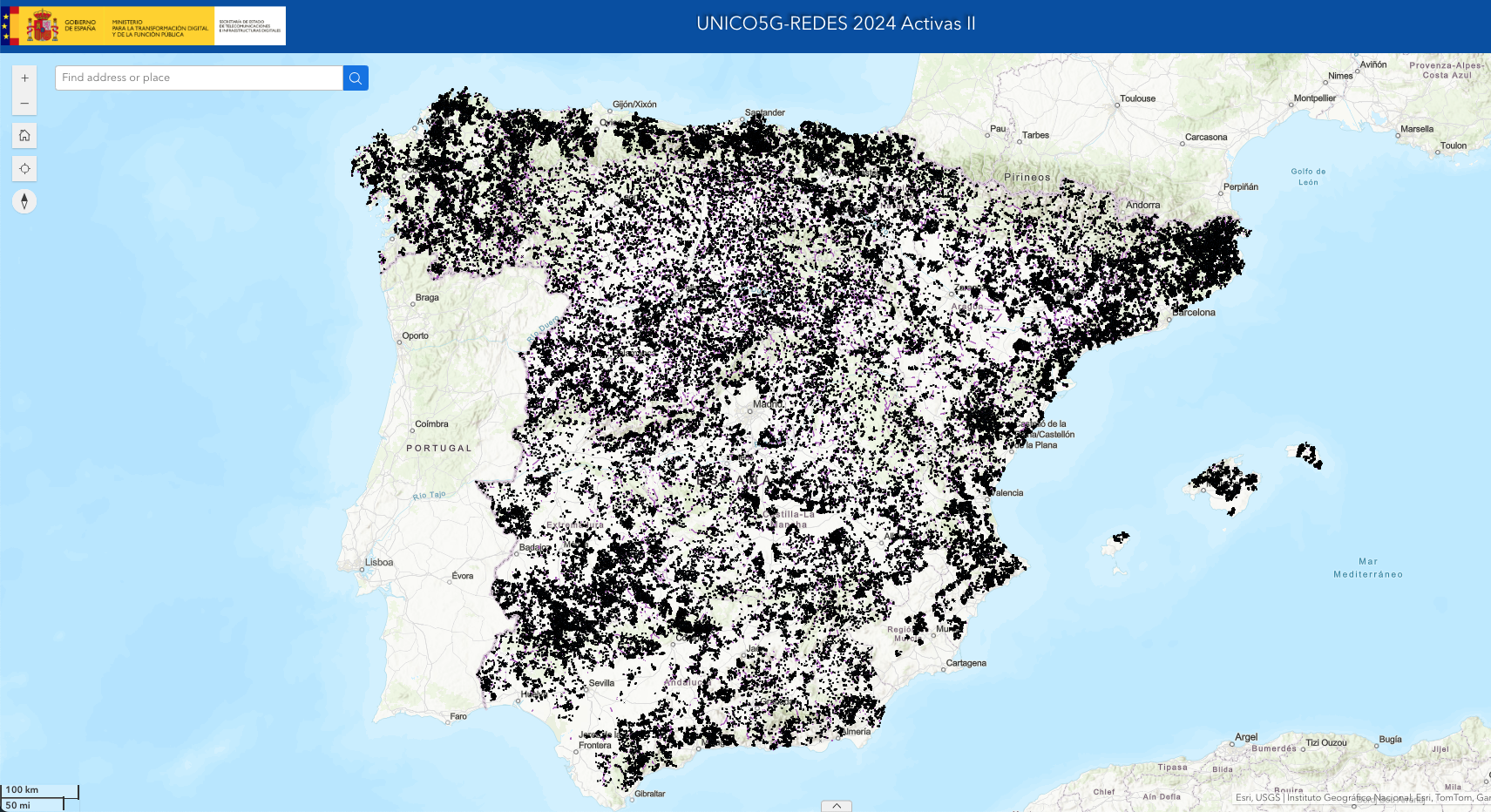
I watched this video the other day—some couple living off-grid in Spain. First thing they mention? “We’re close to a town here and get 5G connection.”
Weird place to start, right? You’d think they’d talk about solar panels, rainwater collection, composting toilets.
Nope. 5G.
But then it hit me—yeah, duh. I live in an apartment with a 5G antenna basically tap-dancing on my roof. I don’t even think about connection. It’s just there.
So what happens when it’s not?
Sure, you’ve got Wi-Fi at home—Starlink, satellite, something. But step outside? Walk the dog? Drive into town? What if the car dies on some random dirt road? What if you’re halfway up some winding mountain path, no houses in sight, and your phone just gives up completely?
What about when you’re on horseback, surveying the plains, and bandits show up? (Okay, Spain’s not the Wild West. Got carried away. But you get me.)
Maybe it sounds snowflake-y, worrying about signal. But I work remote. Clients call whenever, and I’m forever juggling meetings while hauling kids, dropping off my wife, grabbing vegetables.
You get the chaos. It’s not just calls. It’s emails. Messages. Random updates. Things that stack up fast when you’re not plugged in.
No signal? Dream over.
So I started poking around. Found this piece in El Confidencial about a village up north. Their cemetery—700 meters above the village itself—is always busy.
Not with funerals. With locals making phone calls. Because it’s the only place for miles with signal.
That story led to a stat: 122 villages in Spain with basically zero mobile coverage. Mostly northern: Asturias, Cantabria, Castilla y León, Cuenca.
But also patches in Catalonia, Andalucía, Murcia.
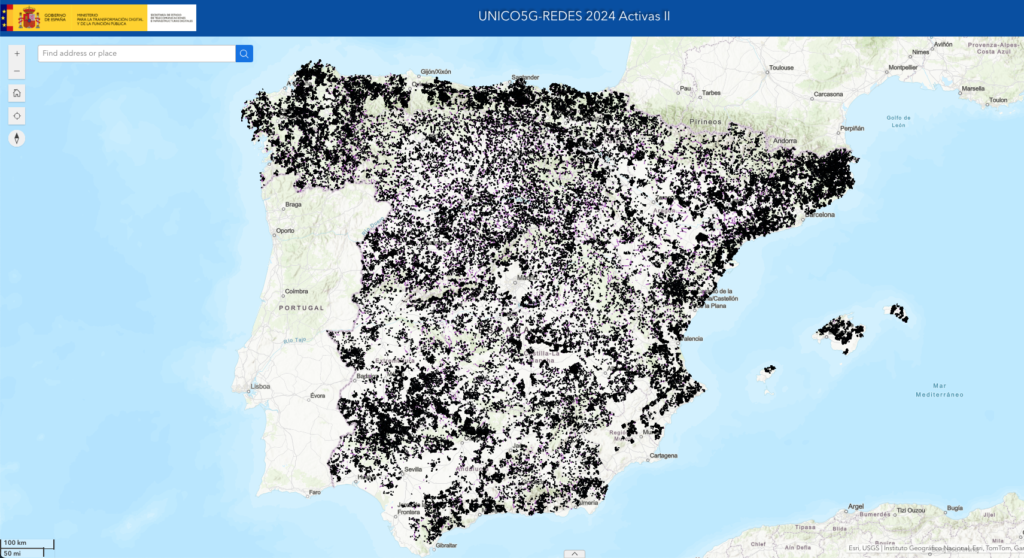
I started digging. Found an official map showing areas with mobile speeds under 50 Mbps. Sounds okay, right? But for mobile, that’s crawling. Like, sure, you can Google stuff or send a quick WhatsApp, but try loading an attachment for work or keeping a video call going without it freezing every other sentence—not happening.
Stick yourself under a proper 4G or 5G tower? You’re flying at 100 to 500 Mbps.
So I zoomed in. Checked the expat off-grid hotspots.
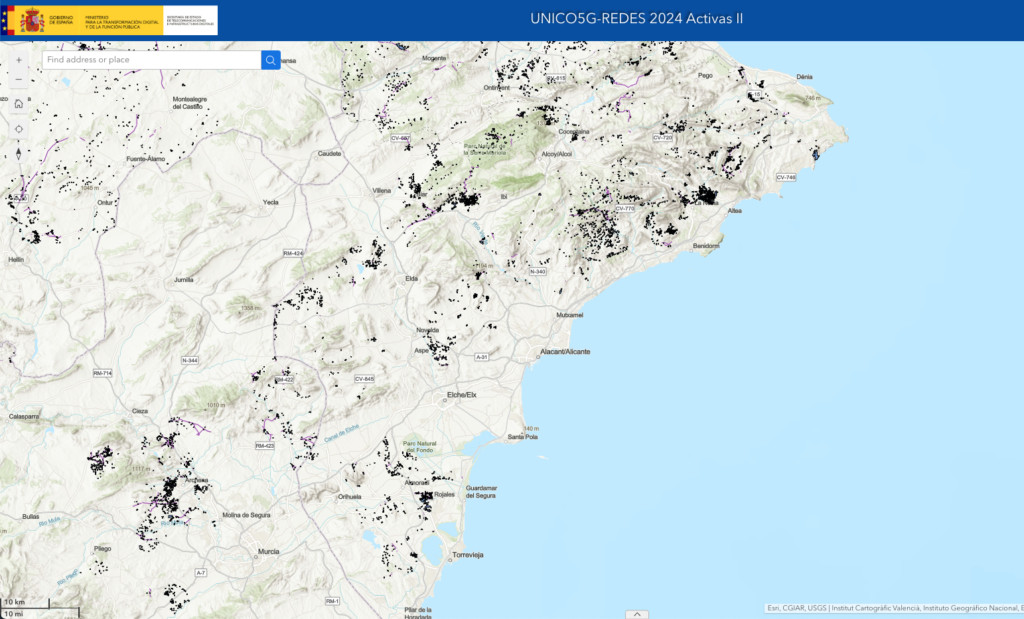
Costa Blanca
Coastline? Solid signal. But go inland—yikes. Around Guadalest reservoir, Polop, La Nucia? Dead zones.
Same with mountain roads like Jalon to Calp. Even some urbanisations—Cumbre del Sol, Benitachell—have blind spots.
Further south, it’s patchy near Rojales and Almoradí. Oh, and the mountains near Ibi, Biar, Villena? Forget it.
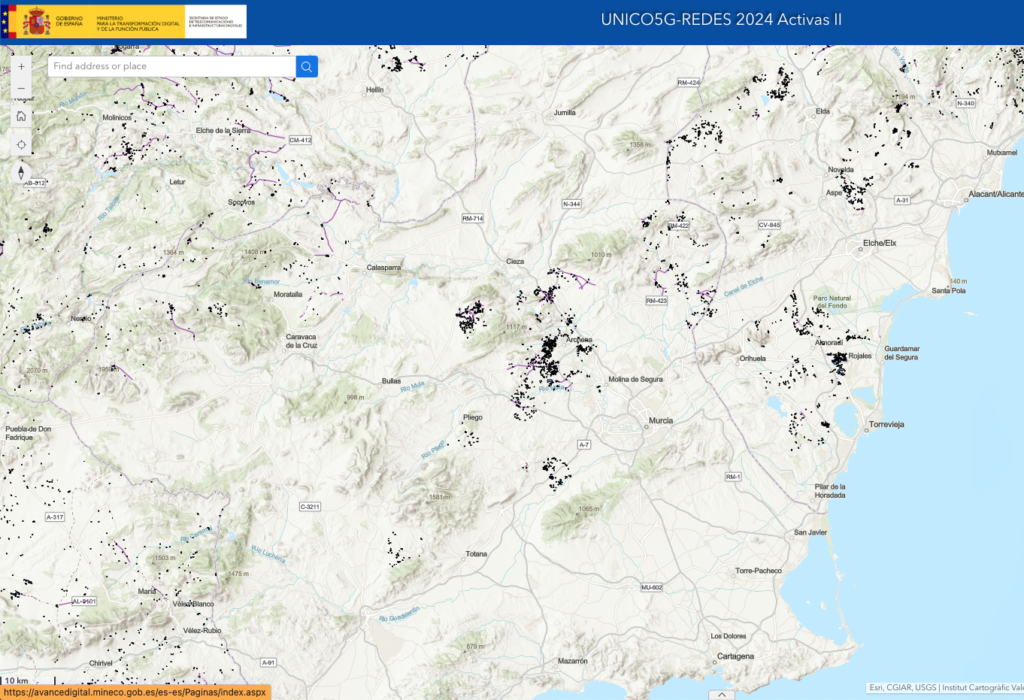
Murcia
Flat, mostly. Good coverage. But—and this surprised me—black holes near Archena, Ceutí, Abarán, Blanca. The kind of gaps that don’t make sense until you’re standing there, waving your phone around like an idiot, wondering if you took a wrong turn into some signal black hole.
Off-grid house hunting? Check signal first.
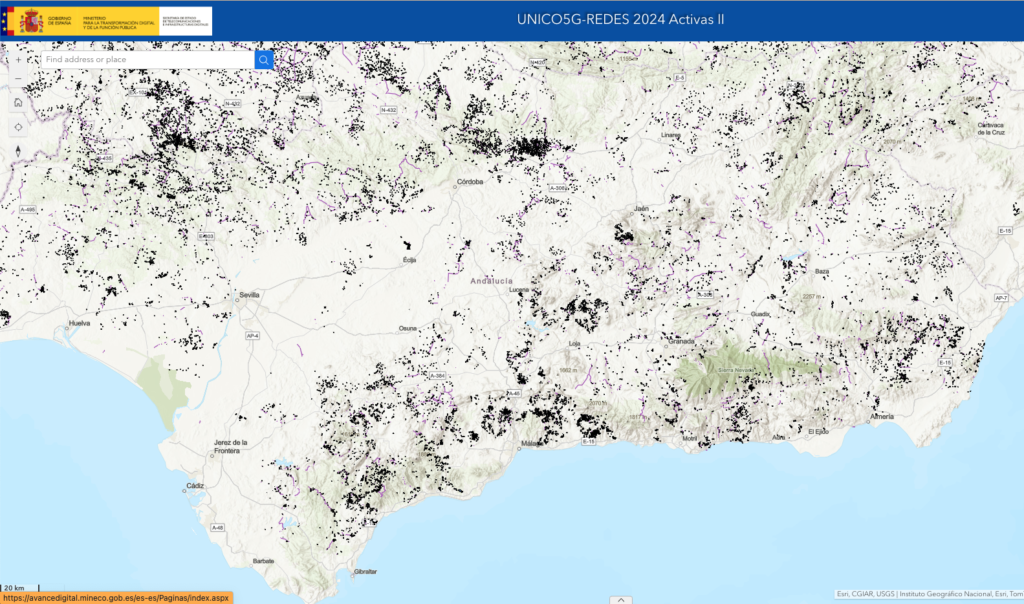
Andalucía
Massive no-signal zones. The dry guts of Almería—especially Tabernas Desert—are Swiss cheese.
Then there’s Sierra de la Contraviesa, around Albuñol. Big chunks of the Alpujarras valley.
Mountains behind Málaga and Torrox? Spotty. Sierra de Bermeja above Manilva? Patchy.
Hills behind Marbella? Same. Ronda’s rugged outskirts? Forget it.
Seeing all those dead zones made me realise how important network coverage is. You could be this close to a major town and still get ghosted by your mobile carrier.
Just another thing to add to the off-grid checklist—right alongside water rights, solar potential, and not accidentally buying land that’s technically a goat path.
Because sure, escaping modern life sounds great. But staying connected? At least when you choose?
Kinda makes the dream doable—unless you’re cool with climbing to the village graveyard every time you need to check your email!
Here’s a link to the interactive map if you want to take a look: https://experience.arcgis.com/experience/6e074d7c953c4d409989beed3b6d3264