
Right, so—living off-grid in Spain. Sounds like a dream, doesn’t it?
Sunshine, peace and quiet, growing your own food, not having to deal with landlords or council tax. Yeah, I’ve thought about it too. Spent hours watching YouTube videos, reading blogs, fantasising about my little patch of land somewhere warm.
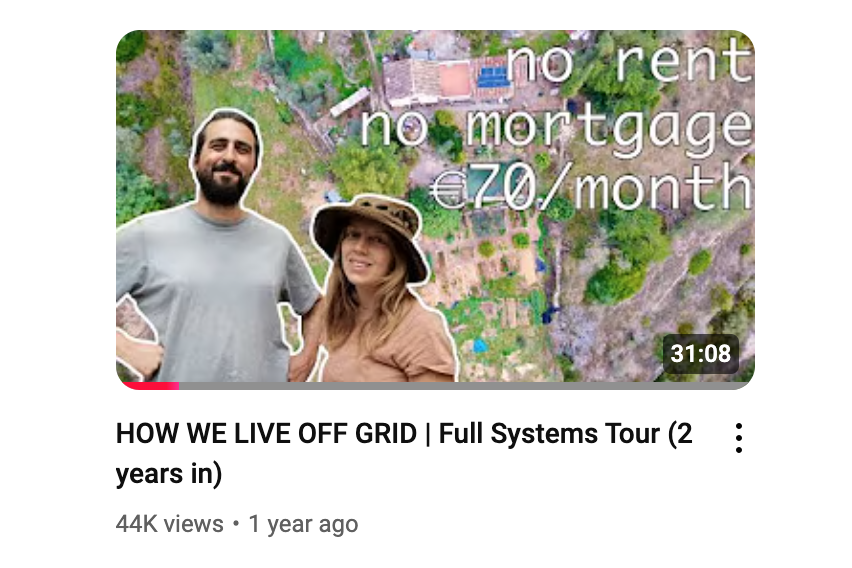
Then I saw this video: HOW WE LIVE OFF GRID | Full Systems Tour (2 years in) by Little Spanish Farmstead. Lovely couple—Spanish and English mix—been doing the off-grid thing in Castellón, Valencia for a couple of years now. Proper eye-opener. Some bits were inspiring. Some? A bit terrifying, if I’m honest.
So, here’s what I took away from it—stuff you really need to think about before ditching the mains and running for the hills.
1. Location, Location, Location
They’ve got a 4-acre plot in the hills. Looks gorgeous. But no running drinking water. None. They have to go and fetch 200 litres from a spring every few days. Imagine that, in 40-degree heat.
Spain’s water situation is a lottery. Up north—Galicia, Asturias? Rainy. No problem. But down south and in the east? Different story. Andalucía, Valencia, Murcia—droughts are getting worse, water restrictions are a thing.
So before you buy a bit of land, ask yourself—where’s the water coming from? Got a well? A spring? Rainwater tanks? Or are you going to be hauling bottles from the supermarket like a tourist in a heatwave?
2. The House—Fixer-Upper or Ready to Go?
They bought an old stone house and fixed it up. Romantic, yeah? But also a ton of work. Plumbing, electrics, roofing—it’s not a weekend DIY job. If you know what you’re doing (or you really like a challenge), fine. Otherwise? Maybe look for something that doesn’t need completely rebuilding.
Living off-grid is hard enough without living in a construction site.
3. Power—Can You Actually Run a Hoover?
They’ve got solar panels, but here’s the bit that got me—they have to choose between running the vacuum for 40 minutes or charging their laptops overnight.
That’s the reality of solar. If your setup isn’t big enough (or you don’t have a backup generator), you’ll be making some weird energy-related life choices.
Solar’s great, but it’s not cheap. Batteries are expensive. Get it wrong and you’ll be eating dinner by candlelight more often than you planned.
4. Water—What’s the Plan?
Back when I rented in Spain, we had an aljibe—a big underground tank for rainwater. Loved it. Showers felt amazing. Then we moved somewhere with mains water again and—nope. Didn’t feel the same.
These guys have a spring. Lucky them. Not everyone does.
Wells? They’re drying up in places. Rainwater collection? Works, but only if there’s actual rain. Before you commit to a plot, figure out where your water’s coming from.
5. The Loo—Compost or Septic?
They’ve got a composting toilet. Good for the planet, saves water, but let’s be real—it’s not for everyone.
Other option? Septic tank. Costs about €2,500 to install. Less work, more conventional, but still something to think about before you buy.
6. Staying Warm—Winters Get Cold, You Know
They heat their house with a wood-burning stove. Standard. My in-laws do the same, and I’ve helped them chop wood. Let me tell you—cutting and stacking firewood is not something you want to be doing when it’s already freezing outside.
Also, firewood costs add up unless you’ve got access to a load of free logs.
7. Cooking—How Are You Doing It?
They use butane gas canisters. Cheap (about €10 a month) and reliable. You could mess about with rocket stoves or solar ovens, but honestly? Gas is simple, and when you’re hungry, you’ll be glad for it.
8. Internet—Do You Actually Need It?
They’ve got satellite internet. Works fine most of the time, but outages happen. If you work online (like I do), that’s a problem.
Starlink’s an option, but pricey. Best thing? Check what’s available before you buy land. Rural Spain isn’t exactly known for lightning-fast broadband.
9. Growing Your Own Food—Sounds Nice, But…
Growing veg sounds idyllic. Until you realise how much work it actually is.
They grow some stuff, but even they admit—it’s not as easy as it looks. Bugs, droughts, weird soil conditions—it’s a full-time job in itself.
Got kids? A job? Other responsibilities? Be honest about how much time you can actually give to farming before you go all-in on the Good Life dream.
Thinking of going off-grid?
I know this post has been more questions than answers. But I’ve got a good 1-3 years to go before I’m fully ready to go off-grid.
If you’ve got any questions you’d like to me to research and report back on… drop them below!